Meyer on Medved: the blind leading the blind

Posted 23 October 2013 by

So, Stephen Meyer is allegedly going to "respond" to critics of Darwin's Doubt this afternoon on the Medved show (Medved is a DI fellow, this particular show is being broadcast from inside the Discovery Institute). They are even inviting critics to call in -- it's your very own chance to rebut Meyer's dozens of overlapping errors and admissions with a single question or statement, and with the Discovery Institute controlling the microphone! What a deal! Over here in real science, we mostly try to address complex scientific topics through writing and analysis. And the critics have done quite a bit of that, although you'd never know it from reading the Discovery Institute blog, where David "spin til it hurts" Klinghoffer has pushed the rhetoric-to-truth ratio to heights not seen since the Kitzmiller days. Klinghoffer's constant refrain is that the critics aren't addressing Meyer's arguments. Well, let's make a little list, shall we? It will be convenient as a checklist for anyone who listens to the Medved show today. Major criticisms of Darwin's Doubt by informed critics: 1. Meyer's book, which is supposed to be about the Cambrian Explosion, gets the Cambrian Explosion fossil record wrong. The real fossil record is:
1. Ediacaran fauna in the Precambrian 2. Before the beginning of the Cambrian, we see then bilaterian worm tracks that gradually increase in diversity 3. In the latest few million years of the Precambrian, we observe Cloudina and other minute and very simple "small shelly" fossils 4. For about 20 million years, throughout the earliest part of the Cambrian, we see the "small shelly" fossil faunas gradually increase in diversity 5. Only after all of this do we reach the "main pulse" of the Cambrian Explosion. But even here, the representatives of the "phyla" mostly stem taxa, meaning that they lack some of the key characters found in the extant crown groups, and many of them exhibiting character suites "transitional" between the crown groups 6. Throughout the later Cambrian and on into the Ordovician, we have gradual takeover of faunas by the earliest members of what end up as the living crown groups, and further evolution of new bodyplans in the Ordovician for some groups
As Graham Budd writes in Budd 2003:
CONCLUSIONS The combination of important refinements in the treatment of the systematics of Cambrian fossils, and in our understanding of Cambrian stratigraphy is leading to a more precise view of the Cambrian explosion. Phyla do not appear in a sudden jumble, implying an appearance in the fossil record induced by some external influence (e.g., a rise in atmospheric oxygen levels) that allowed a standing diversity already present to be manifested in the record. Rather, the impression rather is of a rapid, but nevertheless resolvable and orderly appearance, starting with the earliest skeletal forms such as Cloudina that are reasonably assignable to a diploblast grade (i.e., stem- or crown-group cnidarians or basal stem-group bilaterians). These are followed by taxa that lie in basal positions within bilaterian clades, and (in general) considerably later by representatives of the crown-groups of phyla. Revisions to the Cambrian time-scale allow a moderately long period of time, some tens of millions of years, between the first likely bilaterian trace fossils, and the general appearance of crown-group members of the phyla.
However, however, because of poor research, or a tendency to ignore inconvenient facts, or both, all Meyer and his defenders give their readers is:
1. Ediacaran fauna 2. Poof! Almost all of the the phyla appear at once, fully formed, with no transitional forms!
As I've said before, this doesn't respect the science or the data. As I'm writing this, I see that Stephen Meyer just (Finally! 4 months after I made the criticism!) put up a response on the small shellies question. And...wow, Meyer made the briefest mention of small shellies in endnote 39 of chapter 4, in an endnode on the definition of the base of the Cambrian, therefore he's OK! (never mind that small shellies technically predate the base of the Cambrian, so Meyer got even that part wrong) He also confuses the question of whether the small shellies can be identified with specific groups which is debatable in many cases (but there have been several successes in doing this), with the question of whether or not they are ancestral at all. I don't think there is anyone now who would assert they are some completely independent group. Gould half-suggested this in Wonderful Life in the tiny bit of text that he puts into the small shellies, but that was nearly 25 years ago, and the study and dating of small shellies has advanced dramatically since then. And having critters with chainmail armor just before you find fossils with full plate armor is surely not a coincidence. Regarding dating the "Explosion", surely it is more important to get correct the timing and sequence of events relevant to the origin of the bilaterians, than it is to quote authorities about when "the Explosion" was. At the very least, skeletons and skeletonization were evolving during the small shelly period, millions of years before the "Explosion". How can this not be important? How could Meyer have left this out for his readers, none of whom would have checked the endnote, nor realized that a huge piece of the puzzle that was being elided there! . . 2. Meyer says that transitional fossils for the Cambrian groups don't exist, but fossils with morphology transitional between the crown phyla do exist, oodles of them. Meyer just doesn't have the knowledge, either of fossils or methodology, to know a transitional fossil even if it is right there in front of him. I made the basic argument previously, but it can be done even more clearly with the amazing new study by Legg et al., which coded and analyzed hundreds of characters of hundreds of Cambrian arthropods and arthropod relatives.
Legg_etal_2013_NatComm_panarthropod_phylogeny.png
...and, if we zoom in on the base of the tree:
Legg_etal_2013_NatComm_Figure4ab_Lobopodia_etc_bigger.png Figure 4: Phylogeny of panarthropoda (just parts a & b).
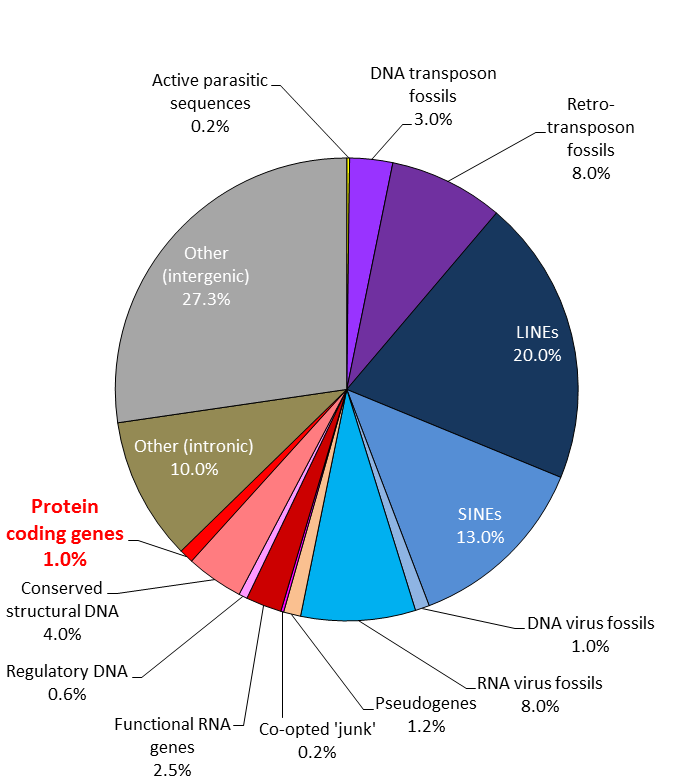
Bam! See "EUARTHROPODA" down at the lower right? That's the node representing the last common ancestor of all living arthropods, i.e. crown group arthropods. Bumblebees, king crabs, hummingbird moths, millipedes, shrimp, horseshoe crabs -- they're all just subgroups of that one little subgroup of these fossils. Everything branching below EUARTHROPODA on the tree lacks one of more characters that unite all living arthropods. See ONYCHOPHORA, in the middle of (a)? That's the closest living phylum to arthropods. Between two modern crown group phyla (arthropods and onychophorans), there are dozens of species with intermediate character suites. And that's just the species currently known to science well enough to describe and put in a character matrix. This is why I was ranting and raving about lobopods in my previous posts. No transitional fossils? Take a hike, Stephen Meyer and David Klinghoffer! . . 3. Meyer claims that phylogenetic methods are worthless, but doesn't know that phylogenetic hypotheses are statistical statements and are statistically testable through standard methods -- methods which themselves are testable and well-tested. Virtually any time such methods are applied to real data, including in Cambrian divergences, there is a strong statistical tree signal, and strong congruence between different datasets, and this remains true whether or not different datasets give exactly the same phylogenetic results on any particular phylogenetic question. The most divergent results typically come from the smallest datasets -- small numbers of taxa or small numbers of characters, or both (with the number of taxa being more important than the number of characters), which is exactly what any scientist would expect from any statistical inference procedure. For actual serious information on this topic, which Meyer mentions only to then ignore, see Doug Theobald's FAQ, particularly the section on phylogenetic tree statistics. . . 4. Meyer claims that the evolution of new genetic information is virtually impossible, a claim he is able to sustain mostly because he doesn't understand the phylogenetic methods (see above) that are necessary for inferring the history of the origin of genes. Apparently he wants us scientists to think that gene sequences share similarities that fall into nice tree patterns -- including, often, direct genomic remnants of duplication, transposition, and other mutational processes -- just because the intelligent designer put those signals there just to make it look like evolution happened. Even some of Meyer's colleagues at the Discovery Institute agree that Meyer is wrong here -- Michael Behe and David Berlinski accept that natural evolutionary processes can produce new genes and thus new genetic information -- they are apparently just too craven to admit the contradiction forthrightly. Since Meyer's main argument is about how intelligent design is the unique and only known cause of new information, he really is sunk even if one duplicate gene with a few mutations and little bit of new information is accepted as having occurred naturally. If it can happen one time in one species, what can happen over hundreds of millions of years across millions of species? . . 5. Meyer's claim that "massive amounts" of new genetic information was required for the Cambrian Explosion is belied by the fact that gene number, and most of the key developmental patterning genes are shared broadly across the phyla, and even outside of bilaterians, rather than looking like they originated in the midst of the divergence of the phyla.** Meyer obscures this with wild assertions about genomics and tons of "information" in the noncoding DNA. This leads us to: 6. Meyer claims that the "junk DNA" hypothesis has been refuted, and that therefore the 90+ percent of large animal genomes that doesn't code for genes or gene regulation is actually a massive additional amount of new information, but Meyer doesn't rebut or even acknowledge the massive, basic, evidential problems with this idea. (And, for that matter, neither does the ENCODE project or the various journalists who were snookered by this triumph of wishful thinking over hard evidnece.) The problems are: 6a. Simple calculations show that if most of the DNA in large-genomed organisms like humans was essential, given known mutation rates, we would die from fatal mutations each generation. This was Ohno's original argument for junk DNA, and it has not been rebutted by ENCODE, the creationists, or anyone else. 6b. Genome sizes in complex animals and plants vary by orders of magnitude within many specific groups (tetrapods, onions, ferns, salamanders, arthropods, whatever), but despite this, within each group they all have about the same number of genes, and approximately the same organs and developmental complexity. The obvious and straightforward inference is that most of the DNA which is sometimes present, and sometimes absent, isn't necessary, and probably isn't doing much even when it is present. 6c. When you actually look at the sequences in the variable fraction of the genome, most of it looks like the product of mutational processes with no selective filtering -- transposon remnants, fossil viruses, duplications and other mutational errors, etc. Furthermore, unlike genes and important regulatory regions, which are well-conserved between closely related species, the apparent junk DNA looks like it has no constraint. Arguments 6a, 6b and 6c have not been rebutted by ENCODE, the creationists, or anyone else. They've hardly even been acknowledged, let alone addressed in a serious way, let alone effectively rebutted. In the face of all of this, it staggers belief for Meyer and his defenders to think that anyone who knows the above facts will be impressed with Meyer's book, or Klinghoffer's ceaseless din of spin. I suspect that Klinghoffer himself sustains his energy on little more than the faith that his chosen "experts" know what they are talking about, and that they are brave rebels against the dogmatic establishment. Earth to David: look into these topics for yourself. Pick any one of them! Read the papers, look at the raw data for yourself, and take the trouble to learn enough about the methods and data to actually do a simple analysis (a graph or phylogeny) yourself. Then start asking Meyer or other ID authorities what their explanation is, and why the evolutionary analysis is wrong. Don't be afraid to follow the evidence where it leads -- just make sure you are actually aware of the actual evidence, instead of relying on the mishmash of quote-mines and creationist misunderstandings that are tossed together in Meyer's book. . . Notes and References * Graham Budd is the highest form of expert here, in that he a paleontologist whose speciality is specifically Cambrian organisms. ** Ditto for protein domains, etc., which are also widely distributed, and are not specific to the bilaterian phyla, so did not have to originate in the Cambrian. If a creationist/ID fan wants to talk about more remote origins, or the origin of life, that's fine, but they should realize that by switching topics in an attempt to avoid admitting error, they have effectively admitted defeat on the original topic, which was the Cambrian Explosion. Legg et al. (2013). "Arthropod fossil data increase congruence of morphological and molecular phylogenies." Nature Communications 4, doi:10.1038/ncomms3485
165 Comments

ogremk5 · 23 October 2013

Stealing thunder... sigh. Ah well, my next few posts were going to be about phylogenetics. Oh well, I still can harp on Meyer for using his stupid hand-drawn graphs that have no relationship to reality and show what some people (including Budd) actually see when looking at the Cambrian.

DS · 23 October 2013

Thanks for the reference. It looks very interesting. I wonder if Meyer is ever gong to admit that it exists, or that it demolishes his nonsense? If you aren't going to get any data of your own, you could at least know what data is already out there. If creationists want to be taken seriously, this is the first step, admitting you have a problem.

Kurt Denke · 23 October 2013

Thanks, Nick, for another good piece on that horrible, horrible book. I've been reading the Amazon reviews and it's sad to see how many people are taken in by Meyer's lies. It always cheers me to see people like you fighting the good fight.

Nick Matzke · 23 October 2013

I listened to the show for the first 50 minutes or so, then I had to go to a meeting. The only reply to critics that I heard was a fair bit about how Jerry Coyne wouldn't read the book or agree to debating it, and once sentence summarily dismissing the review by yours truly since it happened in 24 hours (it was more like 36 hours, but whatevs, these guys aren't very precise on dating). There was a lot about climate change and Obamacare, with Stephen Meyer talking a lot about climate change. Why do one science denial why you can do two!

Did anyone else hear the rest of it?

Dennis Venema · 23 October 2013

I've been dealing with this issue lately as well, in the ongoing "Evolution Basics" series I'm writing for BioLogos. The last few posts have been on phylogenetics, and I start with the pre-Cambrian / Cambrian.

This section of the series starts here:

http://biologos.org/blog/evolution-basics-the-cambrian-diversification-part-1

DavidK · 23 October 2013

Nick Matzke said: I listened to the show for the first 50 minutes or so, then I had to go to a meeting. The only reply to critics that I heard was a fair bit about how Jerry Coyne wouldn't read the book or agree to debating it, and once sentence summarily dismissing the review by yours truly since it happened in 24 hours (it was more like 36 hours, but whatevs, these guys aren't very precise on dating). There was a lot about climate change and Obamacare, with Stephen Meyer talking a lot about climate change. Why do one science denial why you can do two! Did anyone else hear the rest of it?
No, I wasn't aware of it. But Medved used to be in Seattle and I recall his radio program, disgustingly conservative as it was, on the (KVI) radio station. They always had a pre-call handler taking incoming calls where they'd decide who gets on the show, or is put in an eternal state of limbo. So I'm wondering how many people who might have been critical of Meyer were given air time and how he responded to them, along with Medved, and in what tone, and like you, how he responded.

Nick Matzke · 23 October 2013

There were a coupla call in questions, softballs mostly, one guy tried to get Meyer to admit the IDer was God and got the usual responses.

Jeffrey Shallit · 23 October 2013

I only heard the last 15 minutes, but in that time I heard 3 lies.

John Harshman · 23 October 2013

Meyer has explained why he can ignore the small shellies, etc.: the timing of the explosion is irrelevant, because the real message is that any significant evolution is impossible no matter how long you allow it to take. So why spend so much of the book on the timing of the Cambrian explosion? I think the obvious answer is that he wants, for other reasons, to have a more or less instantaneous creation event. That's also why he spends a whole chapter attacking phylogenetic analysis, which is also peripheral to his claimed main point: though he never quite comes out and says it, his version of ID is separate creation, preferably in big, simultaneous events. 'Cause that's how God would do it. He doesn't say it because that would violate the big tent policy in which he's buddies with theistic evolutionists like Behe. But I'm pretty sure on the basis of this book that Meyer is into separate, fiat creation of taxa at some level, probably including separate creation of H. sapiens.

Nick Matzke · 23 October 2013

Let's just say it like it is -- he's an Old-Earth Creationist arguing for special creation! Which is basically what Agassiz believed, BTW, I think.

Oh, and he definitely thinks humans were specially created, IIRC this was made clear in the Kansas Kangaroo Court in 2005.

Pierce R. Butler · 23 October 2013

Shouldn't point 1.3 read, "In the earliest years of the Cambrian..."?

DS · 23 October 2013

Well if he isn't going to state a hypothesis about what happened and when, then he isn't going to be able to test any hypothesis against the evidence. So I guess that's why he's just ignoring all of the evidence. He already has the answer and now all he has to do is convince everybody that he is right, without ever actually stating what he is right about. All he knows is that evolution must be wrong, regardless of the evidence. Now that's science folks. (NOT).

Frank J · 23 October 2013

Nick Matzke said: There were a coupla call in questions, softballs mostly, one guy tried to get Meyer to admit the IDer was God and got the usual responses.
I have been listening to Medved's weekly DI love fest for months, but lately I'm losing interest, specifically because nearly all callers are either cheerleaders, or like that one, probably hand-picked by Medved and/or his guest to keep the topic on God, instead of asking exactly what the DI has determined that the designer did, where when and how. As you noted, Meyer's position seems to be periodic origin-of-life events over billions of years. Behe's is apparently "in vivo interventions," also over billions of years, while Paul Nelson seems to favor an all-at-once happening, 1000s of years ago - or maybe Last Thursday. They refuse to "teach the controversy" among themselves, yet they have the audacity to demand that we do. Go figure!

DS · 23 October 2013

If the show is live you could tell the screener anything just to get on, then change your tune once you were on the air. At least the audience would realize that there was an opposing view, even if they cut you off quickly. Some might even wonder why you weren't allowed to ask your question, if they think there is nothing to hide. If the show is taped, that approach isn't going to work. Then they could engage in the same kind of censorship they are famous for. The rubes who want to be fooled will be fooled no matter what.

Paul Burnett · 23 October 2013

Kurt Denke said: ...that horrible, horrible book. I've been reading the Amazon reviews and it's sad to see how many people are taken in by Meyer's lies.
I would like to invite all of you to join in on the roasting of the five-star reviewers at Amazon. We're not letting them get away with much, but we could use a few more pro-science commenters. Click on the five star reviews and then click on "Newest" - there's a new chump or two every day. (I have the dubious honor of being the very first person to review "Darwin's Doubt" on Amazon...it was a one-star review.)

https://me.yahoo.com/a/hHXYfJpysYHQ3610gllC7ldTYTqv#37db0 · 24 October 2013

Casey Luskin accuses Charles Marshall of wrongly criticizing Meyer for disregarding the small shellies and shortening the duration of the Cambrian Explosion, while doing the same in his own papers and acknowledging the same by other experts:

http://www.evolutionnews.org/2013/10/small_shelly_fo078261.html

TomS · 24 October 2013

DS said: Well if he isn't going to state a hypothesis about what happened and when, then he isn't going to be able to test any hypothesis against the evidence. So I guess that's why he's just ignoring all of the evidence. He already has the answer and now all he has to do is convince everybody that he is right, without ever actually stating what he is right about. All he knows is that evolution must be wrong, regardless of the evidence. Now that's science folks. (NOT).
A problem with bringing up scientific evidence and reasoning is that it can give the impression to the audience that there is a legitimate scientific controversy. "I didn't understand a word they were saying, but that Meyer fellow talked science." If we can just get the point across that the evolution-deniers have nothing to offer about what happened, when and where, why or how. That they have no interest in answering questions like what sorts of things turned into what, why things turned out the way they did rather than something else, what rules the intelligent designer(s) follow. For every problem that the advocates of ID bring up, what is their solution to the problem - for example, what is the probability that designer(s) would decide to make life the way it is, when they were not constrained by the laws of nature - for example, what would the designer(s) not do? I understand that scientists like to talk about science, and like to correct mistakes, and that there is a lot of interesting stuff about evolutionary biology to discuss. But evolution-denial is not a deep subject, and let's not give the impression that it is.

SensuousCurmudgeon · 24 October 2013

Aside from the book itself, one of the funniest things was Meyer's recent post at the Discovery Institute blog in which he insisted that his book doesn't commit the "god of the gaps" fallacy. His denial is absurd, of course, because that fallacy is the whole point of the book.

He insisted: "[M]y argument does not qualify as a God-of-the-gaps argument for the simple reason that the argument does not attempt to establish the existence of God."

That's a great example of how those people operate, not only in their pretense of offering "science" arguments, but also in their proposed "academic freedom" law. It's all about word-games.

ogremk5 · 24 October 2013

Paul Burnett said:
Kurt Denke said: ...that horrible, horrible book. I've been reading the Amazon reviews and it's sad to see how many people are taken in by Meyer's lies.
I would like to invite all of you to join in on the roasting of the five-star reviewers at Amazon. We're not letting them get away with much, but we could use a few more pro-science commenters. Click on the five star reviews and then click on "Newest" - there's a new chump or two every day. (I have the dubious honor of being the very first person to review "Darwin's Doubt" on Amazon...it was a one-star review.)
I've been playing with those people for years. It's like trying to hammer a soda can into a concrete block. I finally got sick of it and invited them to continue the discussion on my blog, where we could argue specifics... not a single one has shown up. Which also tells you something about their motivations. It's not to learn, but to evangelize.

eric · 24 October 2013

SensuousCurmudgeon said: Aside from the book itself, one of the funniest things was Meyer's recent post at the Discovery Institute blog in which he insisted that his book doesn't commit the "god of the gaps" fallacy. His denial is absurd, of course, because that fallacy is the whole point of the book. He insisted: "[M]y argument does not qualify as a God-of-the-gaps argument for the simple reason that the argument does not attempt to establish the existence of God."
Did anyone comment that committing a "designer of the gaps" fallacy is exactly as bad as a "god of the gap" fallacy?

John Harshman · 24 October 2013

Nick,

Can you document any cases of Meyer clearly and unambiguously coming out in favor of special creation? If so, I would be interested. If not, how close can you get? Closer than Darwin's Doubt manages? Meyer, like pretty much everyone at the Disco Tute, is a serious weasel.

DS · 24 October 2013

eric said:
SensuousCurmudgeon said: Aside from the book itself, one of the funniest things was Meyer's recent post at the Discovery Institute blog in which he insisted that his book doesn't commit the "god of the gaps" fallacy. His denial is absurd, of course, because that fallacy is the whole point of the book. He insisted: "[M]y argument does not qualify as a God-of-the-gaps argument for the simple reason that the argument does not attempt to establish the existence of God."
Did anyone comment that committing a "designer of the gaps" fallacy is exactly as bad as a "god of the gap" fallacy?
Actually it's worse, because now there is one more gap to fill! :)

https://me.yahoo.com/a/hHXYfJpysYHQ3610gllC7ldTYTqv#37db0 · 24 October 2013

SensuousCurmudgeon said: Aside from the book itself, one of the funniest things was Meyer's recent post at the Discovery Institute blog in which he insisted that his book doesn't commit the "god of the gaps" fallacy. His denial is absurd, of course, because that fallacy is the whole point of the book. He insisted: "[M]y argument does not qualify as a God-of-the-gaps argument for the simple reason that the argument does not attempt to establish the existence of God." That's a great example of how those people operate, not only in their pretense of offering "science" arguments, but also in their proposed "academic freedom" law. It's all about word-games.
He claims there's a positive case for design because only a "mind" is known to create the kind of complexity and information seen in the Cambrian animals. Here's a recent rebuttal of that nonsense: http://theskepticalzone.com/wp/?p=3450

Nick Matzke · 24 October 2013

Test...

Nick Matzke · 24 October 2013

Pierce R. Butler said: Shouldn't point 1.3 read, "In the earliest years of the Cambrian..."?
Thanks for the double-check! But actually, Cloudina and the other first small shellies occur before the Cambrian starts, in the late Ediacaran. I think the ID people get the idea that they start at the base of the Cambrian from a careless misreading of Marshall. There may also have been a period a few decades ago where Cloudina was thought to be simultaneous with the Cambrian, but with improved stratigraphy and dating this is no longer the case. In general, the dating and stratigraphy has changed quite a bit over the decades, everyone has to be careful to update their statements to the latest work. I think basics will be pretty stable from here on out but this has only been put in place in the last 10-15 years, and some of the sub-periods within the Cambrian are still in flux. The creationists tend to quote stuff from the 1990s when the Atdabanian was particularly compressed. Or they quote molecular biologists who are citing this older work. Sometime I'll do a post on this.

ksplawn · 24 October 2013

https://me.yahoo.com/a/hHXYfJpysYHQ3610gllC7ldTYTqv#37db0 said:
SensuousCurmudgeon said: Aside from the book itself, one of the funniest things was Meyer's recent post at the Discovery Institute blog in which he insisted that his book doesn't commit the "god of the gaps" fallacy. His denial is absurd, of course, because that fallacy is the whole point of the book. He insisted: "[M]y argument does not qualify as a God-of-the-gaps argument for the simple reason that the argument does not attempt to establish the existence of God." That's a great example of how those people operate, not only in their pretense of offering "science" arguments, but also in their proposed "academic freedom" law. It's all about word-games.
He claims there's a positive case for design because only a "mind" is known to create the kind of complexity and information seen in the Cambrian animals. Here's a recent rebuttal of that nonsense: http://theskepticalzone.com/wp/?p=3450
An even easier rebuttal is that this is just circular reasoning. "Only a mind is known to create that kind of complexity!" "How do you know that this kind of complexity did not come about without mental guidance?" "Because only a mind is known to create that kind of complexity!" "What if this is an example of such complexity arising without a mind creating it?" "It can't be." "Oh? Why's that?" "Because only a mind is known to create that kind of complexity!"

TomS · 24 October 2013

ksplawn said: An even easier rebuttal is that this is just circular reasoning. "Only a mind is known to create that kind of complexity!"
"Do you have an example of a mind creating that kind of complexity?" Often enough, we have creationists marveling at the complexity of some feature of the natural world, telling us that no human has ever created something so complex. Which is true. Which means that the analogy fails: Such-and-such is far more complex than anything that we know of that is intelligently designed. It's not "circular" reasoning, it's Mobius strip reasoning, where, when going around the loop, things turn upside down.

eric · 24 October 2013

TomS said: "Do you have an example of a mind creating that kind of complexity?"
What an interesting reversal. I had not thought of it that way. I suppose that the gut response of a creationist would be to claim that human-built things are more complex* than nature-built things (watch vs. rock), therefore, anything even more complex than a human-built thing must also be the product of intelligence (universe vs. watch). But that ignores all the nature-built things that ARE more complex than human built things (pulsar vs. watch). If you have no explanation for what built the (most complex) universe and you are attempting to extrapolate from less complex things, it is irrational to pick one fairly low point on the scale and say "its like that" instead of looking at all the other more complex points on the scale.

Nick Matzke · 24 October 2013

John Harshman said: Nick, Can you document any cases of Meyer clearly and unambiguously coming out in favor of special creation? If so, I would be interested. If not, how close can you get? Closer than Darwin's Doubt manages? Meyer, like pretty much everyone at the Disco Tute, is a serious weasel.
This is pretty clear, I think!
Q. Do you accept the general principle of common descent that all life is biologically related back to the beginning of life, yes or no? A. I won't answer that question as a yes or no. I accept the idea of limited common descent. I am skeptical about universal common descent. I do not take it as a principle; it is a theory. And I think the evidence supporting the theory of universal common descent is weak. Q. Do you accept that human beings are related by common descent to prehominid ancestors, yes or no? A. I'm not sure. I'm skeptical of it because I think the evidence for the proposition is weak, but it would not affect my conviction that life is designed if it turns out that there was a genealogical continuity. Q. Based upon your understanding, do you have an alternative explanation for the human species if not common descent from prehominid ancestors? A. That is not my area of expertise. I work at the other end of the history of life, namely the origin of the first life in the Cambrian phylum. Q. Do you have a personal opinion as to the question I have just proposed to you, which is if you do not believe that human beings have a common descent with prehominid ancestors, what is your personal alternative explanation for how human beings came into existence? A. I am skeptical about the evidence for universal common descent and I'm skeptical about some of the evidence that has been marshaled for the idea that humans and prehominids are connected. But as I said, it wouldn't bother me (unintelligible) stronger than I presently think. Q. What is your personal opinion at this time? A. That I'm skeptical about the Darwinian accounts of such things, but that it wouldn't bother me if it turned out to be different. I think my-- I also would tell you that humans and the rest of the non human living world, that humans have qualitatively different features that I think are very mysterious and hard to explain on any materialistic account of the origin of human life.

eric · 24 October 2013

Nick Matzke said: This is pretty clear, I think!
Nick, John, IMO you're both right. Nick's example is clear AND Meyer's answer is seriously weaselly.

John Pieret · 24 October 2013

John Harshman said: Nick, Can you document any cases of Meyer clearly and unambiguously coming out in favor of special creation? If so, I would be interested. If not, how close can you get? Closer than Darwin's Doubt manages? Meyer, like pretty much everyone at the Disco Tute, is a serious weasel.
There is Meyer's involvement in Focus on the Family's "TrueU" course in apologetics aimed at kids going off to college, particularly "Biology: Is There Evidence for Intelligently Designed Life?": http://dododreams.blogspot.com/2011/09/of-sheep-and-clothing.html In the "Leaders Guide" to Meyer's course it states "Review the evidence that points to theism as the best explanation for the origin of the universe and life." No matter his weaselship, it's clear to the people he is "teaching" just what he is trying to convey Note: The links in my post to Focus on the Family's site, whether to protect Meyer or for some other reason, have apparently now been scrubbed.

Henry J · 24 October 2013

I am skeptical about universal common descent. I do not take it as a principle; it is a theory.

Of course it's not a principle; it's a conclusion.

didymos1120 · 24 October 2013

eric said:
Nick Matzke said: This is pretty clear, I think!
Nick, John, IMO you're both right. Nick's example is clear AND Meyer's answer is seriously weaselly.
That's a pretty standard Creationist play for the ones who care about appearing like serious, impartial observers who just care about good, solid science, man. Cornelius Hunter does pretty much the exact same dance whenever pressed on what he actually thinks.

John Harshman · 24 October 2013

Nick Matzke said:
John Harshman said: Can you document any cases of Meyer clearly and unambiguously coming out in favor of special creation?
This is pretty clear, I think! [Quote from Kansas testimony]
I'll agree that it's the clearest statement from him that I've been able to find, but I'd say that it's far from clear. If you read closely, he just "doubts" universal common descent, something very far away from the Cambrian, and says that there isn't enough evidence for human evolution. In other words, what part of "I won't answer that question" is unclear to you? So, can anyone do better?

John Harshman · 24 October 2013

John Pieret said:
John Harshman said: Can you document any cases of Meyer clearly and unambiguously coming out in favor of special creation?
There is Meyer's involvement in Focus on the Family's "TrueU" course in apologetics aimed at kids going off to college, particularly "Biology: Is There Evidence for Intelligently Designed Life?": http://dododreams.blogspot.com/2011/09/of-sheep-and-clothing.html In the "Leaders Guide" to Meyer's course it states "Review the evidence that points to theism as the best explanation for the origin of the universe and life." No matter his weaselship, it's clear to the people he is "teaching" just what he is trying to convey
That's clear on who he thinks the designer is, but it has nothing to do with how he thinks the designer did it, which was my question. It's nothing that Michael Behe couldn't say (in any rare moment of honesty).

Nick Matzke · 24 October 2013

John Harshman said:
Nick Matzke said:
John Harshman said: Can you document any cases of Meyer clearly and unambiguously coming out in favor of special creation?
This is pretty clear, I think! [Quote from Kansas testimony]
I'll agree that it's the clearest statement from him that I've been able to find, but I'd say that it's far from clear. If you read closely, he just "doubts" universal common descent, something very far away from the Cambrian, and says that there isn't enough evidence for human evolution. In other words, what part of "I won't answer that question" is unclear to you? So, can anyone do better?
He doubts universal common ancestry, common ancestry of the Cambrian phyla, and the common ancestry of humans with other life. Doubt = he thinks something else is more probable. If not common ancestry, then separate ancestry is the only other alternative. And of course he's said the IDer is responsible, and he personally thinks the IDer is God. There's not really distance from special creation there.... Unlike some other IDists, Meyer has been self-consciously organizing/planning the ID movement since literally about the 1987 SCOTUS decision. So it's not surprising that he is more thoroughly weasel-ish than most...

Carl Drews · 24 October 2013

Paul Burnett said: I would like to invite all of you to join in on the roasting of the five-star reviewers at Amazon. We're not letting them get away with much, but we could use a few more pro-science commenters. Click on the five star reviews and then click on "Newest" - there's a new chump or two every day.
Please be sure your reviews/rebuttals at Amazon are substantive and professional. Otherwise, it's just gaming the system, and making the pro-science side look as bad as the ID side.

John Harshman · 24 October 2013

Nick Matzke said: He doubts universal common ancestry, common ancestry of the Cambrian phyla, and the common ancestry of humans with other life. Doubt = he thinks something else is more probable.
If you look closely, the only one he actually says he doubts (in the quoted Kansas testimony at least) is universal common ancestry. He never mentions the Cambrian, and all he says about human evolution is that he's skeptical because there isn't enough evidence. That isn't doubt, just skepticism, precisely the attitude one should adopt if there isn't good evidence one way or another. He's been more careful about his weaseling that you seem to think.

Frank J · 24 October 2013

John Harshman said:
Nick Matzke said: He doubts universal common ancestry, common ancestry of the Cambrian phyla, and the common ancestry of humans with other life. Doubt = he thinks something else is more probable.
If you look closely, the only one he actually says he doubts (in the quoted Kansas testimony at least) is universal common ancestry. He never mentions the Cambrian, and all he says about human evolution is that he's skeptical because there isn't enough evidence. That isn't doubt, just skepticism, precisely the attitude one should adopt if there isn't good evidence one way or another. He's been more careful about his weaseling that you seem to think.
Count another vote for "serious weasel." Behe is, or at least was in the 90s, one of the least politically correct IDer. So he admitted "~4 billion years of common descent," and never wavered. The rest are astutely aware that their target audience, both irreversible deniers and fence-sitters looking for any excuse - are most passionate about not being related to "monkeys" (more often than not meaning "chimps"). So they choose their words very carefully. Something they know they would not need to do if they truly thought that there was the slightest shred of evidence favoring 2 or more independent origin-of-life for humans and other species.

Nick Matzke · 24 October 2013

all he says about human evolution is that he’s skeptical because there isn’t enough evidence
Well that's just nonsense on stilts all by itself! The human fossil record, and human genomics, are both better known than they are for most things, and the evidence for common ancestry is strong even for all those other things, it's ridiculously strong when it comes to humans. If someone says he's skeptical that the Earth is old, is he closer to science or to YEC? I think the answer is pretty clear. But I'm sure you know all of this. I don't know of a case where he endorses "special creation" in those exact words (unlike some other IDists). Re: Cambrian -- Darwin's Doubt contains plenty of arguing against common ancestry, that's what I was thinking of there...

Frank J · 24 October 2013

If someone says he’s skeptical that the Earth is old, is he closer to science or to YEC? I think the answer is pretty clear.

— Nick Matzke
Certainly closer to peddling YEC than to conceding science. But that type of person always seems to know better than to challenge Behe or OECs who deny common descent. Or provide any evidence of any particular alternate age of the earth. One of the slickest you may recall was Bryan Leonard. At the Kangaroo Court when asked his opinion of the age of the earth, he said 4.6 billion years, but refused to say it without the qualifier: "I teach my students..."

Nick Matzke · 24 October 2013

PS: Forgot to mention before, I listened to the rest of the show as it was on repeating loop, nothing more in response to critics. The score on the points critics have raised above: 0/6.

Nick Matzke · 24 October 2013

Blargh, Meyer's latest:
http://www.evolutionnews.org/2013/10/does_lightning-078321.html

Short version: he doesn't care about the Lee et al. paper showing that rates of evolution in Cambrian arthropods were only 5 times greater than the later background rate, because questions of rates don't explain how genes and morphological changes happen. Never mind all the work on the origin of new genes. Never mind that the Cambrian Explosion was mostly not about new genes anyway. Never mind that a huge part of Meyer's argument was about how the Cambrian Explosion happened "too rapidly" for Darwinian evolution -- effectively instantaneously, he seems to want his readers to think. Never mind that different studies address different questions, and phylogenetic studies just give you the order and timing of morphological changes, after which you are in a position to look at individual character changes, a great many of which are minor when taken one at a time anyway. Never mind that Meyer criticizes Lee et al.'s paper for not providing an explanation, while Meyer provides no explanation beyond GodDidItNoQuestionsAllowed.

Like I said, blargh.

Nick Matzke · 24 October 2013

PS: Also: "Does Lightning-Fast Evolution Solve the Cambrian Enigma?"

Lightning fast? Millions of years is lightning fast? What the hey?

John Pieret · 24 October 2013

John Harshman said:
John Pieret said:
John Harshman said: Can you document any cases of Meyer clearly and unambiguously coming out in favor of special creation?
There is Meyer's involvement in Focus on the Family's "TrueU" course in apologetics aimed at kids going off to college, particularly "Biology: Is There Evidence for Intelligently Designed Life?": http://dododreams.blogspot.com/2011/09/of-sheep-and-clothing.html In the "Leaders Guide" to Meyer's course it states "Review the evidence that points to theism as the best explanation for the origin of the universe and life." No matter his weaselship, it's clear to the people he is "teaching" just what he is trying to convey
That's clear on who he thinks the designer is, but it has nothing to do with how he thinks the designer did it, which was my question. It's nothing that Michael Behe couldn't say (in any rare moment of honesty).
This is a bit round about but ... David Klinghoffer, the DI's designated whiner, had this rather strange post about how God's "modesty or shyness" is why the evidence for ID is "very lightly imprinted." http://www.ou.org/jewish_action/02/2012/shabbos-judaisms-priceless-treasure/ After citing Meyer's Signature in the Cell," Klinghoffer, who must certainly know Meyer's actual beliefs, says:
It is the totality of that evidence that impresses you, the way that taken altogether it forms a suggestive pattern and alludes, subtly, to purpose and creativity behind nature’s facade. It is a “still small voice,” hardly more. Furiously gesturing to your own creativity would be immodest, the opposite of humble—not God’s style at all.
Of course, this still doesn't admit "special creation" as most Fundamentalists Christians understand it ("poof"), it does signal a belief that the "Designer" did not just set up the conditions for evolution and let it play it out. It requires direct intervention by God in how life developed.

ogremk5 · 24 October 2013

Nick, that's something I don't get from Meyer (well, there's a lot I don't get about him), but in the first couple of chapters of the book, he complains several times about how Darwinists (whatever those are) need millions of years to do stuff... and then says that the Cambrian Explosion isn't enough time. Page 12 for example when Meyer says
More significant changes to the form and anatomical structure of organisms would, by the logic of Darwin's mechanism, require untold millions of years, precisely what seemed unavailable in the case of the Cambrian explosion.
And yet the first time he mentions the actual time length of the Cambrian is in chapter 3. He's been poisoning the well for a prologue and most of three chapters by this point and then just casually mentions that the Cambrian Explosion was 20-40 million years. Just looking briefly, I can't see that the claims about how evolution needs millions of years is within a chapter of range of that statement of the age of the Cambrian. It's almost as though he's hoping that the reader doesn't know and has forgotten what he's said in the book. He's hoping that he's made people antagonistic towards evolution, then told the truth, and then hopes they forget by the time he starts talking about times again in chapter 4 (briefly).

https://www.google.com/accounts/o8/id?id=AItOawm-WhebH0itIDDTj06EQo2vtiF0BBqF10Q · 25 October 2013

Nick Matzke said: PS: Also: "Does Lightning-Fast Evolution Solve the Cambrian Enigma?" Lightning fast? Millions of years is lightning fast? What the hey?
At the very same time Casey Luskin is using Venter's "Life at the speed of light" to promote ID-creationists. He would had the chance to ask Venter directly for his opinion on ID-creationism but rather prefered to not ask this question. Otherwise he may not have been able to cite Venter in the way he did. Of cause it was not his fault. There was just not enough time:
The Q+A afterward was relatively brief, and I didn't ask any questions. But I suppose if I had, I would have asked something like this: Given your view that DNA is software, are you aware of any examples where software had its ultimate origin in anything other than intelligence? It would be have been interesting to hear his answer.

Kevin B · 25 October 2013

Nick Matzke said: PS: Also: "Does Lightning-Fast Evolution Solve the Cambrian Enigma?" Lightning fast? Millions of years is lightning fast? What the hey?
Given that creationists always conflate Evolution with Origin of Life, perhaps someone has got confused about the Urey-Miller Experiment.

TomS · 25 October 2013

Henry J said:

I am skeptical about universal common descent. I do not take it as a principle; it is a theory.

Of course it's not a principle; it's a conclusion.
And calling it a "theory" is supposed to give it low status? Like atomic theory, maybe?

Frank J · 25 October 2013

Henry J said:

I am skeptical about universal common descent. I do not take it as a principle; it is a theory.

Of course it's not a principle; it's a conclusion.
Yet more evidence that the DI (if not Biblical activists) are playing word games and know it. Specifically, they almost always qualify common descent with "universal" when they seem to deny it. They envision this caricature that not even "Darwinists" agree on, namely a first cell that's ancestral to all subsequent life. Dembski, in one of his masterpieces, in the same paragraph, remarks, almost approvingly, how Behe accepts it, while Carl Woese (a "Darwinist" to the DI) "explicitly" rejects it. As you might know, Woese suggested that fully-free-living organisms might have arisen more than once deep in the Precambrian, while Behe speculated on a single "designed" ancestral cell.

Ron Okimoto · 25 October 2013

ogremk5 said: Nick, that's something I don't get from Meyer (well, there's a lot I don't get about him), but in the first couple of chapters of the book, he complains several times about how Darwinists (whatever those are) need millions of years to do stuff... and then says that the Cambrian Explosion isn't enough time. Page 12 for example when Meyer says
More significant changes to the form and anatomical structure of organisms would, by the logic of Darwin's mechanism, require untold millions of years, precisely what seemed unavailable in the case of the Cambrian explosion.
And yet the first time he mentions the actual time length of the Cambrian is in chapter 3. He's been poisoning the well for a prologue and most of three chapters by this point and then just casually mentions that the Cambrian Explosion was 20-40 million years. Just looking briefly, I can't see that the claims about how evolution needs millions of years is within a chapter of range of that statement of the age of the Cambrian. It's almost as though he's hoping that the reader doesn't know and has forgotten what he's said in the book. He's hoping that he's made people antagonistic towards evolution, then told the truth, and then hopes they forget by the time he starts talking about times again in chapter 4 (briefly).
My guess is that Meyers never says what he thinks happened during the Cambrian explosion. It would be a hoot to see him try to explain the data with his model. Just substitute space aliens for the IDiot's designer and have Meyers go back and forth for millions of years tweeking evolution during the Cambrian to get it all done on time. According to a link provided by an infamous panspermist on TO it could take a million years for the space alien probes to reach earth. How the probes would tweek things is unknown, but how many probes would it take? How would the space aliens know when to send the genetic material over 3 billion years after they seeded the earth with the original lifeforms in order to effect the Cambrian explosion? Why never give a brief outline form of what Meyers thinks happened and when?

Frank J · 25 October 2013

My guess is that Meyers never says what he thinks happened during the Cambrian explosion.

— Ron Okimoto
Or just enough to keep the rubes - everyone from flat-earthers to panspermists - content that he has validated all of their mutually-contradictory "theories." If he's not smart enough to realize that "multiple abiogenesis events during the Cambrian" would be the research opportunity of the millennium, certainly some DI Fellows are.

eric · 25 October 2013

John Harshman said:
Nick Matzke said: He doubts universal common ancestry, common ancestry of the Cambrian phyla, and the common ancestry of humans with other life. Doubt = he thinks something else is more probable.
If you look closely, the only one he actually says he doubts (in the quoted Kansas testimony at least) is universal common ancestry. He never mentions the Cambrian, and all he says about human evolution is that he's skeptical because there isn't enough evidence. That isn't doubt, just skepticism, precisely the attitude one should adopt if there isn't good evidence one way or another. He's been more careful about his weaseling that you seem to think.
There is no sense in ignoring the subtext and context. Not even juries in a formal court setting are required or asked to do that. 1. There's only one group that generally prevaricates and hedges on these questions - creationists. Skeptics don't. Scientifically uninformed people don't. 2. The setting was a questioning of experts brought in by Kansas to support teaching Intelligent Design as part of their curriculum. These people had already provided written and/or oral testimony support for teaching ID when the questioning Nick quotes began. So, again, strong evidence that "mere skeptic" is not the position of any of the people (including Meyer) being quetioned here. 3. Pedro Irigonegaray (for the Science side) went through each witness in turn, asking them how old the earth was and how they thought species originated. Meyer was not the first. By the time Meyer took the stand, they were in to day 3 and Irigonegaray had already questioned 15 prior experts. Any fumbling, surprise, or appearance of lack of preparation to answer these questions is faked. Its an act. Meyer had known exactly what he was going to be ased for at least 36 hours. Thus, the answers are calculated, not someone merely hedging because they weren't sure of what the lawyer was driving at.

SensuousCurmudgeon · 25 October 2013

Ron Okimoto said: Just substitute space aliens for the IDiot's designer and have Meyers go back and forth for millions of years tweeking evolution during the Cambrian to get it all done on time. According to a link provided by an infamous panspermist on TO it could take a million years for the space alien probes to reach earth. How the probes would tweek things is unknown, but how many probes would it take?
According to the accounts of UFO abductees that I frequently see on the History Channel, the probing is still going on.

_Arthur · 25 October 2013

According to The Simpsons, aliens may have reached the limits of what probings can teach them.

Frank J · 25 October 2013

1. There’s only one group that generally prevaricates and hedges on these questions - creationists. Skeptics don’t. Scientifically uninformed people don’t.

— eric
Wait. I thought "creationists" were "scientifically uninformed people." :-) I know what you mean. Though for the first 30 years that I accepted evolution (60s to 90s) I would not have. Nor do ~99% of the people, and probably some lurkers, if not regular readers of these sites. So if you don't mind, I'll explain: Anti-evolution activists are more scientifically informed than most nonscientists-on-the-street (including, sadly, most who accept evolution), even if they are clueless compared to the average undergrad bio major. They know enough about the science to misrepresent it to the majority. Whereas evolution-deniers-on-the-street are as scientifically uninformed as they come. They will rote-memorize many sound bites against evolution, but its easy to trap them into contradicting other deniers, and often, even themselves. Since I am a "Darwinist" I need to be clear that I don't consider activists and deniers-on-the-street separate "kinds." There is the occasional "transitional fossil." Usually someone who gets bold enough to write a letter-to-the-editor. Invariably they are shocked to learn how much they got wrong, so they either retreat to their inner circle, or join the scam.

Nick Matzke · 25 October 2013

Kevin B said:
Nick Matzke said: PS: Also: "Does Lightning-Fast Evolution Solve the Cambrian Enigma?" Lightning fast? Millions of years is lightning fast? What the hey?
Given that creationists always conflate Evolution with Origin of Life, perhaps someone has got confused about the Urey-Miller Experiment.
Heh -- they are quoting media headlines which used the term "lightning-fast" in relation to the Lee et al. paper, but they should know better. But, half of creationism/ID involves surveying the distribution of media reports, then collecting and quoting from the most misleading end of the distribution...

Mike Elzinga · 25 October 2013

Frank J said: Wait. I thought "creationists" were "scientifically uninformed people." :-) I know what you mean. Though for the first 30 years that I accepted evolution (60s to 90s) I would not have. Nor do ~99% of the people, and probably some lurkers, if not regular readers of these sites. So if you don't mind, I'll explain: Anti-evolution activists are more scientifically informed than most nonscientists-on-the-street (including, sadly, most who accept evolution), even if they are clueless compared to the average undergrad bio major. They know enough about the science to misrepresent it to the majority. Whereas evolution-deniers-on-the-street are as scientifically uninformed as they come. They will rote-memorize many sound bites against evolution, but its easy to trap them into contradicting other deniers, and often, even themselves. Since I am a "Darwinist" I need to be clear that I don't consider activists and deniers-on-the-street separate "kinds." There is the occasional "transitional fossil." Usually someone who gets bold enough to write a letter-to-the-editor. Invariably they are shocked to learn how much they got wrong, so they either retreat to their inner circle, or join the scam.
That seems like a pretty fair assessment. It does, however, call into question the ethical and moral fiber of the dear leaders of the ID/creationist movement. If they indeed understand science but misrepresent even the most basic high school level concepts, then they probably know they are doing it. If, on the other hand, they really haven’t grasped the basics – because they have automatically and routinely bent and broken concepts to fit sectarian dogma all their lives – then they are not to be trusted simply because of their ignorance. Unfortunately, if this is the case, then they are also unaware of their own ignorance but believe themselves to be experts who have seen farther than all working scientists on the planet. Morton’s Demon is strong with them.

Henry J · 25 October 2013

Either way, they're comments aren't to be trusted.

Nick Matzke · 25 October 2013

Henry J said: Either way, they're comments aren't to be trusted.
Neither is Nedin.

John Harshman · 25 October 2013

So nobody can find Meyer explicitly claiming that he believes in any form of special creation of species. You have to read between the lines, and it's still technically possible to deny that he holds that position, if you really want to. That's a masterful job considering the length of his paper trail.

Rolf · 25 October 2013

If they indeed understand science but misrepresent even the most basic high school level concepts, then they probably know they are doing it.
What aren't people capable of doing when they believe they are doing it for The Highest Cause?

eric · 25 October 2013

John Harshman said: So nobody can find Meyer explicitly claiming that he believes in any form of special creation of species. You have to read between the lines, and it's still technically possible to deny that he holds that position, if you really want to. That's a masterful job considering the length of his paper trail.
Fortunately for us humans are pretty good at reading between the lines. You might almost say we are good at predicting the designs of other humans.

John Pieret · 25 October 2013

John Harshman said: So nobody can find Meyer explicitly claiming that he believes in any form of special creation of species. You have to read between the lines, and it's still technically possible to deny that he holds that position, if you really want to. That's a masterful job considering the length of his paper trail.
Wait until he lasts as long as Bernie Madoff!

TomS · 26 October 2013

John Harshman said: So nobody can find Meyer explicitly claiming that he believes in any form of special creation of species. You have to read between the lines, and it's still technically possible to deny that he holds that position, if you really want to. That's a masterful job considering the length of his paper trail.
It doesn't interest me what Meyer believes. What I want to know is whether he (or anyone else) offers any alternative exposition of what happened and when, something which tells us how the world of life ended up the way it is without naturalistic evolution being a factor, whether humans are physically related to the rest of life - and if not, how it turned out that our bodies are so similar to those of other living things.

harold · 26 October 2013

John Harshman said: So nobody can find Meyer explicitly claiming that he believes in any form of special creation of species. You have to read between the lines, and it's still technically possible to deny that he holds that position, if you really want to. That's a masterful job considering the length of his paper trail.
That's the whole point of ID. There are a few people who peddle some version of open YEC directly, most notably Ken Ham. However, there are many more, including all DI fellows of course, who pander to biased science denial. The whole point of ID is to thinly disguise any religious content, use superficially "scientific" language, and appear to be doing an end run around Edwards v. Aguillard, even though that play ended for a loss in 2005. (Even if the Ohio Supreme Court does blatantly pander to political allies with a decision in favor of Freshwater, that case merely hinges on whether or not he was terminated properly, not whether or not the school board can include or can be obliged to include sectarian evolution denial in the curriculum.)

Ron Okimoto · 26 October 2013

SensuousCurmudgeon said:
Ron Okimoto said: Just substitute space aliens for the IDiot's designer and have Meyers go back and forth for millions of years tweeking evolution during the Cambrian to get it all done on time. According to a link provided by an infamous panspermist on TO it could take a million years for the space alien probes to reach earth. How the probes would tweek things is unknown, but how many probes would it take?
According to the accounts of UFO abductees that I frequently see on the History Channel, the probing is still going on.
The IDiots at the Discovery Institute are doing the probing. They are bending all the creationist rubes over and giving them the switch scam. The sad thing is that some of them are taking it. Guys like Santorum seem to have had enough probing and have gone back to calling what they want taught creationism.

harold · 26 October 2013

Ron Okimoto said:
SensuousCurmudgeon said:
Ron Okimoto said: Just substitute space aliens for the IDiot's designer and have Meyers go back and forth for millions of years tweeking evolution during the Cambrian to get it all done on time. According to a link provided by an infamous panspermist on TO it could take a million years for the space alien probes to reach earth. How the probes would tweek things is unknown, but how many probes would it take?
According to the accounts of UFO abductees that I frequently see on the History Channel, the probing is still going on.
The IDiots at the Discovery Institute are doing the probing. They are bending all the creationist rubes over and giving them the switch scam. The sad thing is that some of them are taking it. Guys like Santorum seem to have had enough probing and have gone back to calling what they want taught creationism.
Although it's worth responding to ID stuff from the DI, to some degree, ID is anachronistic. It's more or less a fake strategy, that emerged in the 1980's and became somewhat prominent in the early 2000's, of pretending that Edwards v. Aguillard can be evaded by phrasing evolution denial in a particular weasel-word, dog whistle style. It was basically rendered somewhat moot when the Thomas Moore Legal Center, to the horror of the DI, took the scam too literally, which resulted in the resounding court defeat at Dover in 2005. The TMLC is nothing like the DI; whereas the DI evades direct confrontations and does the same thing over and over again, the TMLC proudly loses in court over and over again, ostensibly in the name of defending religion, in somewhat diverse ways (albeit with TMLC always on the religious authoritarian side). The TMLC is funded by a billionaire who demands action but isn't bothered by losses, whereas the funders of the DI seem to tolerate repetitive largely meaningless verbosity rather than actual action. However, there's still a DI, and will be for the indefinite future. The funding isn't going away. From Wikipedia - 'The CSC offers fellowships of up to $60,000 a year for "support of significant and original research in the natural sciences, the history and philosophy of science, cognitive science and related fields." Published reports state that the CSC has awarded $3.6 million in fellowships of $5,000 to $60,000 per year to 50 researchers since its founding in 1996.[23]' That [23] refers to an NY Times article from 2005, so the amount may now be greater. Naturally, if you pay people with ostensible academic credentials to crank out anti-evolution screeds in a particular easily-mastered style of verbosity and evasion, they will do so. (I would assume that key figures like Casey Luskin receive considerably more than "fellowship" support.) The DI isn't going away but its impact is declining exponentially with time.

ksplawn · 26 October 2013

harold said:
John Harshman said: So nobody can find Meyer explicitly claiming that he believes in any form of special creation of species. You have to read between the lines, and it's still technically possible to deny that he holds that position, if you really want to. That's a masterful job considering the length of his paper trail.
That's the whole point of ID.
As evidenced by the fact that this discussion and the subsequent research into his position have even been necessary.

Rolf · 27 October 2013

Intelligent Design is based on a bigger designer-god in a bigger hole than all the purported holes in the scientific theory of evolution together.

If they have a designer it is about time they tell us how, where and when he did it. How did he get the idea to create biology before any biology had ever existed? And how did he do it?

It seems to me ID is unthinkable unless in the context of a supreme magician and that takes us back to Genesis.

Ron Okimoto · 27 October 2013

harold said:
Ron Okimoto said:
SensuousCurmudgeon said:
Ron Okimoto said: Just substitute space aliens for the IDiot's designer and have Meyers go back and forth for millions of years tweeking evolution during the Cambrian to get it all done on time. According to a link provided by an infamous panspermist on TO it could take a million years for the space alien probes to reach earth. How the probes would tweek things is unknown, but how many probes would it take?
According to the accounts of UFO abductees that I frequently see on the History Channel, the probing is still going on.
The IDiots at the Discovery Institute are doing the probing. They are bending all the creationist rubes over and giving them the switch scam. The sad thing is that some of them are taking it. Guys like Santorum seem to have had enough probing and have gone back to calling what they want taught creationism.
Although it's worth responding to ID stuff from the DI, to some degree, ID is anachronistic. SNIP: The DI isn't going away but its impact is declining exponentially with time.
The Discovery Institute still has its uses. For over a decade the Discovery Institute has been the major force for keeping the ID/creationist claptrap out of the public schools. They run the bait and switch on the rubes, but when the rubes try to implement the switch scam they shut the door on that too. When the guys that sell you the scam tell you it isn't a very good idea to expose the scam to public scrutiny that is about the only thing that the creationist rubes listen too. They obviously do not listen to the science side, but they do usually quit when the Discovery Institute tells them that teaching ID/creationism isn't such a good idea. Dover was the exception to the rule where the rubes got their "free" legal representation and didn't take the switch scam when the ID perps tried to run the bait and switch. The problem is that Discovery Institute's bogus propaganda influences the dishonest and incompetent to try to teach the junk in the public schools anyway. It is only the organized legislative and school board efforts that get blocked by the Discovery Institute because no matter how they lie to the creationist rubes, they know that all they ever had was scam. A legislative or school board effort would only end up in court and demonstrate how bogus ID/creationism is, just as it was demonstrated to be bogus in Dover. What has been the Discovery Institute's response to every legislative bill or school board claiming to be able to teach the science of intelligent design in the public schools? Negative, every single time since they started running the bait and switch in Ohio in 2002-2003. These are the guys that used to claim that ID was their business and used to include ID as part of the controversy that they wanted to teach. What was the Discovery Institute's response when the rubes tried to implement the switch scam (that they got from the Discovery Institute) in Louisiana and Texas? Negative each and every time. Now you have guys like presidential candidate Santorum that just say enough is enough and they have gone back to just calling what they want taught creationism. Why did they try to lie about it in the first place? Just recently I noted on TO that the Discovery Institute had deleted the claim that they had a scientific theory of intelligent design to teach in the public schools from their education policy statement up on their web page. The change, apparently, occurred in Feb 2013, but no one noticed because the ID perps just decided to quietly slink away from the claim without announcing such a major change in their education policy. My guess is that the ID perps' future responses to the next generation of creationist rubes inquiring about teaching ID science will be "Teach What?" The Discovery Institute's current education policy statement: http://www.discovery.org/a/3164 The quoted paragraph below is now missing from the new education policy statement, but it was in previous statements for years. I recall the junk about not "mandating" or "requiring" getting added to the statement around the time Dover was hitting the fan.
Although Discovery Institute does not advocate requiring the teaching of intelligent design in public schools, it does believe there is nothing unconstitutional about voluntarily discussing the scientific theory of design in the classroom. In addition, the Institute opposes efforts to persecute individual teachers who may wish to discuss the scientific debate over design in an objective and pedagogically appropriate manner.
Where did the scientific theory of intelligent design go?

TomS · 27 October 2013

Ron Okimoto said: Where did the scientific theory of intelligent design go?
I would rather ask about the theory, simply, with no need to qualify that with "scientific". Or rather, just ask about what happened, when and where. Just a description, no need to demand something as deep as a theory. That avoids diversions about what it means to be scientific ("the demarcation problem") or what qualifies as a real theory.

Ron Okimoto · 27 October 2013

TomS said:
Ron Okimoto said: Where did the scientific theory of intelligent design go?
I would rather ask about the theory, simply, with no need to qualify that with "scientific". Or rather, just ask about what happened, when and where. Just a description, no need to demand something as deep as a theory. That avoids diversions about what it means to be scientific ("the demarcation problem") or what qualifies as a real theory.
You mean hypothesis instead of theory. To date all the ID perps hypotheses have been designed to be untestable, so they never amounted to anything. They never tried to create any testable hypotheses about what happened when or where because that tactic failed the scientific creationists. When and for how long has already been scientifically tested and a lot of the creationists were found to be around 5 orders of magnitude off in their estimate. Not just two fold or ten fold off, but 5 orders of magnitude off. Pretty embarassing. Was there one global flood? Oops, no. The ID perps learned that they had to avoid any testable hypotheses, because they know about the 100% failure rate for their IDiot claims in science. Not a single designer did it claim has ever been verified, but a bunch have been abandoned when what is really happening gets determined. Who changes the seasons? Who pulls the sun and moon across the sky? Who causes disease? Who makes babies? The best that they can manage is to take their claims to the next untestable level after failure. What is the difference between who makes babies and who made the flagellum? They just take the argument to the next untestable level. Really, the 100% failure rate is the primary reason for the ID perps not presenting any testable hypotheses. Some people might claim that they would present them if they could, but they obviously do not in the case of the age of the earth and global flood claims. That is a simple fact. Why not test what you can instead of harp on what you can't say anything definite about?

SensuousCurmudgeon · 27 October 2013

Ron Okimoto said: Just recently I noted on TO that the Discovery Institute had deleted the claim that they had a scientific theory of intelligent design to teach in the public schools from their education policy statement up on their web page. The change, apparently, occurred in Feb 2013, but no one noticed because the ID perps just decided to quietly slink away from the claim without announcing such a major change in their education policy. My guess is that the ID perps' future responses to the next generation of creationist rubes inquiring about teaching ID science will be "Teach What?"
They've also been gradually changing their "theory" about intelligent design. Over the past two years or so, they've had some articles at their blog claiming that even sloppy design (your spine, etc.) can nevertheless be the result of design. They even admit that mere humans can improve on "designs" we find in nature. But if that's true, then how can they claim to detect the designer's handiwork? I doubt that the once-persuasive watchmaker analogy would apply to a barely-functional, slapped-together collection of parts that didn't keep good time. Yet the Discoveroids continue to claim that they know design when they see it.

TomS · 27 October 2013

Ron Okimoto said:
TomS said:
Ron Okimoto said: Where did the scientific theory of intelligent design go?
I would rather ask about the theory, simply, with no need to qualify that with "scientific". Or rather, just ask about what happened, when and where. Just a description, no need to demand something as deep as a theory. That avoids diversions about what it means to be scientific ("the demarcation problem") or what qualifies as a real theory.
You mean hypothesis instead of theory. To date all the ID perps hypotheses have been designed to be untestable, so they never amounted to anything. They never tried to create any testable hypotheses about what happened when or where because that tactic failed the scientific creationists. When and for how long has already been scientifically tested and a lot of the creationists were found to be around 5 orders of magnitude off in their estimate. Not just two fold or ten fold off, but 5 orders of magnitude off. Pretty embarassing. Was there one global flood? Oops, no. The ID perps learned that they had to avoid any testable hypotheses, because they know about the 100% failure rate for their IDiot claims in science. Not a single designer did it claim has ever been verified, but a bunch have been abandoned when what is really happening gets determined. Who changes the seasons? Who pulls the sun and moon across the sky? Who causes disease? Who makes babies? The best that they can manage is to take their claims to the next untestable level after failure. What is the difference between who makes babies and who made the flagellum? They just take the argument to the next untestable level. Really, the 100% failure rate is the primary reason for the ID perps not presenting any testable hypotheses. Some people might claim that they would present them if they could, but they obviously do not in the case of the age of the earth and global flood claims. That is a simple fact. Why not test what you can instead of harp on what you can't say anything definite about?
Once again, I don't have anything really to object to in what you have to say (not even your suggestion that I mean "hypothesis" rather than "theory"), with this one quibble: You point out that they have no "testable" statements to make, where I would say that they have no "positive" (or "substantive" or "definite") statements to offer. For example, if (contrary to their practice) they were to specify that the bacterial flagellum was designed one billion years ago, that would not be "testable", even though it is "definite". Or if they were to say something about the designers (even as minimal as "there was only one designer"). Or even if we were to hear about a topic which has raised interest in their investigators, something which is substantive enough so that one could imagine someone being interested in it.

harold · 27 October 2013

Ron Okimoto - Naturally, I completely agree with everything you said. I wonder if the Feb 2013 disappearance of that particular language is related to any actual event, Freshwater related or otherwise.
TomS said:
Ron Okimoto said: Where did the scientific theory of intelligent design go?
I would rather ask about the theory, simply, with no need to qualify that with "scientific". Or rather, just ask about what happened, when and where. Just a description, no need to demand something as deep as a theory. That avoids diversions about what it means to be scientific ("the demarcation problem") or what qualifies as a real theory.
Yes, when directly addressing someone who claims to be advocating ID, or who is merely using "evolution is impossible" type creationist arguments the best response is to ask them what they think happened instead. I have a list of canned questions for such occasions. This effectively demonstrates to third party observers that they won't answer. Not "can't", "won't". What's ironic is that their fake legalistic strategy is an absolute disaster in a courtroom, or, for that matter, on an uncensored internet comments board. That was also the case with the earlier "Gish gallop" creationist style, which would have been extremely vulnerable to the internet, had there been one at the time, and which failed in court. Fast-talking hucksterism and weasely verbosity are great for selling snake oil. I have a "formula" for ability to perceive reality in any situation: Intelligence + relevant education + relevant experience - bias - mental illness - intoxication. The "already creationist" tend to have low relevant education and low relevant experience, and massive biases. They already desperately want to believe in the snake oil. However, hucksterism and weaselly verbosity break down when those who use these techniques can be pinned down and asked to answer straight questions in a meaningful way.

Just Bob · 27 October 2013

SensuousCurmudgeon said:
Yet the Discoveroids continue to claim that they know design when they see it.
I've never received ANY kind of answer to my question about detecting design:

Take a rock. Any rock. Can a design-detecting IDiot tell if that rock is undesigned -- just the result of chemical and physical reactions at work, or if a Designer wanted the rock to be EXACTLY as it is, with every atom, molecule, and crystal placed EXACTLY where the Designer wanted it, to APPEAR to be undesigned? COULD a Designer do that? If not, why not? If so, then HOW CAN THEY TELL THE DIFFERENCE?

TomS · 27 October 2013

Just Bob said: I've never received ANY kind of answer to my question about detecting design:

Take a rock. Any rock. Can a design-detecting IDiot tell if that rock is undesigned -- just the result of chemical and physical reactions at work, or if a Designer wanted the rock to be EXACTLY as it is, with every atom, molecule, and crystal placed EXACTLY where the Designer wanted it, to APPEAR to be undesigned? COULD a Designer do that? If not, why not? If so, then HOW CAN THEY TELL THE DIFFERENCE?

Your question suggests another one: Give an example of something which is not designed. Now, of course, for someone who thinks of "intelligent design" as synonymous with "creation", and who accepts traditional monotheistic belief in divine creation, God is the Creator of all things, so there can be no example of any real thing which is not created. But I am generous. How about an example of a non-existent, or even impossible thing, which is not created? Is there something which an intelligent designer did not, could not, or would not design? BTW, it is amusing that William Paley, in his famous work, famously contrasted a rock with a watch. Was he not flirting with heresy in suggesting that we could imagine that a rock was not a creature of God?

Just Bob · 27 October 2013

"A rock" or "a pile of dirt" is the typical answer I get (if any) when I ask for an example of something not designed, which I follow up with my question above. The respondent then quickly discovers something very important that he has to attend to.

I don't think they like that question for some reason.

patrick.j.may · 27 October 2013

Just Bob said: SensuousCurmudgeon said:
Yet the Discoveroids continue to claim that they know design when they see it.
I've never received ANY kind of answer to my question about detecting design:

Take a rock. Any rock. Can a design-detecting IDiot tell if that rock is undesigned -- just the result of chemical and physical reactions at work, or if a Designer wanted the rock to be EXACTLY as it is, with every atom, molecule, and crystal placed EXACTLY where the Designer wanted it, to APPEAR to be undesigned? COULD a Designer do that? If not, why not? If so, then HOW CAN THEY TELL THE DIFFERENCE?

That's when the intelligent design creationists pull out CSI. Of course, they can't provide any actual calculations for that, so first they claim to be able to, then they claim to have done so, and then they move on to insults when you point out that they missed the step in the middle.

Just Bob · 27 October 2013

How could CSI or ANYTHING ELSE tell the difference between a 'natural' rock and one designed (by God, of course) to APPEAR 'natural'?

If a Designer could have done such things with 'natural'-appearing objects (and they'll never say God couldn't have done something), then all pretense of distinguishing design from non-design is meaningless bullshit.

Joe Felsenstein · 27 October 2013

patrick.j.may said: SensuousCurmudgeon said:
Yet the Discoveroids continue to claim that they know design when they see it. ... COULD a Designer do that? If not, why not? If so, then HOW CAN THEY TELL THE DIFFERENCE?
That's when the intelligent design creationists pull out CSI. Of course, they can't provide any actual calculations for that, so first they claim to be able to, then they claim to have done so, and then they move on to insults when you point out that they missed the step in the middle.
You're out of date. It has recently been explained by Dembski and his friends that we misinterpreted their use of CSI. They are (now) not saying that first you find CSI, then from its presence you infer Design. No, the definition of CSI is (now) supposed to involve ruling out non-design processes, and only then being able to declare CSI to be present. So the whole use of CSI has, in effect, been declared to be redundant, something you know you have only once you have already concluded for Design.

phhht · 27 October 2013

Joe Felsenstein said: No, the definition of CSI is (now) supposed to involve ruling out non-design processes...
I don't suppose they say how to distinguish a "non-design" process from its opposite.

diogeneslamp0 · 27 October 2013

John Harshman said: So nobody can find Meyer explicitly claiming that he believes in any form of special creation of species. You have to read between the lines, and it's still technically possible to deny that he holds that position, if you really want to. That's a masterful job considering the length of his paper trail.
No. Meyer did embrace creationism, in a 1994 book, "The Creation Hypothesis: Scientific Evidence for an Intelligent Designer", a compilation of essays by ID proponents, Young Earth and Old Earth Creationists. There are chapters by IDiots Meyer, William Dembski, Phillip Johnson, and John Oller, and by YEC Kurt Wise and OEC Hugh Ross. It's an explicitly creationist book, as the title implies. It was edited by J. P. Moreland. In Moreland's intro and first chapter he explicitly defines creationism broadly and says it can be scientific. IDiots Phillip Johnson wrote the Foreword and defines creationism broadly enough to included what was later called Intelligent Design. Meyer's chapter was called "The Methodological Equivalence of Design & Descent: Can There Be A Scientific 'Theory of Creation'?" Meyer's "Scientific Theory of Creation" is a SUBSET of creationism, and equal to what was later called Intelligent Design. Like the other authors, Meyer says that a SUBSET of creationism can be truly scientific. He calls this "a scientific theory of intelligent design or creation" or just "creation or design" for short, and treats them as interchangeable terms. This 1994 book can be searched at Google Books. Meyer's essay is his usual philosophy of science shit. He says the theory of "creation or design" and evolutionary theory can be epistemically equivalent-- creationism isn't falsifiable, but evolution isn't falsifiable either; thus, falsification cannot be invoked as a criteria. So there. This chapter was posted at ARN in 1998: http://www.arn.org/docs/meyer/sm_methodological.htm.
Stephen Meyer wrote: [p.67]: … While many have postulated so-called anthropic principles or “many worlds scenarios” to explain (or explain away) this apparent design without recourse to God1, some have… posited the activity of a preexisting intelligence—a Creator—as the simplest explanation for the “coincidences” upon which life seems to depend. As Sir Fred Hoyle has suggested, a commonsense interpretation suggests that “a superintellect has monkeyed with physics”2 in order to make life possible. Similarly, astronomer George Greenstein wrote in a recent book provocatively subtitled Life and Mind in the Cosmos: “The thought insistently arises that some supernatural agency—or rather Agency—must be involved. Is it possible that suddenly, without intending to, we have stumbled upon scientific proof of the existence [p. 68]: of a Supreme Being? Was it God who stepped in and so providentially crafted the cosmos for our benefit?”3 Despite this renewal of interest in the (intelligent) design hypothesis among physicists and cosmologists, biologists have remained reluctant to consider such notions… [p. 69]: …Science, it is assumed, must look for exclusively natural causes. Since the postulation of an intelligent Designer or Creator clearly violates this methodological norm, such a postulation cannot qualify as a part of a scientific theory. Thus Stephen J. Gould refers to “scientific creationism” not just as factually mistaken but as “self-contradictory nonsense.”11… [p. 71]: …The purpose of this chapter is to examine the case against the possibility of a scientific theory of intelligent design or creation. Several of the criteria said to distinguish the scientific status of naturalistic evolutionary theories (hereafter “descent”) from admittedly nonnaturalistic theories of creation or design (hereafter “design”) will be examined. It will be argued that a priori attempts to make distinctions of scientific status on methodological grounds inevitably fail and, instead, that a general equivalence of method exists between these two competing approaches to origins… In the process of making this argument, I will also discuss whether a scientific theory of creation or design could be formulated or whether methodological objections… make the assertion of a scientific theory of creation an “oxymoron” and “self-contradictory nonsense”, as Ruse, Stent, Gould and others have claimed… [Stephen Meyer, "The Methodological Equivalence of Design and Descent: Can There Be A Scientific 'Theory of Creation'?" (1994)]

John Harshman · 27 October 2013

diogeneslamp0 said:
John Harshman said: So nobody can find Meyer explicitly claiming that he believes in any form of special creation of species. You have to read between the lines, and it's still technically possible to deny that he holds that position, if you really want to. That's a masterful job considering the length of his paper trail.
No. Meyer did embrace creationism, in a 1994 book, "The Creation Hypothesis: Scientific Evidence for an Intelligent Designer", a compilation of essays by ID proponents, Young Earth and Old Earth Creationists. There are chapters by IDiots Meyer, William Dembski, Phillip Johnson, and John Oller, and by YEC Kurt Wise and OEC Hugh Ross.
Thanks, but nothing in your quote has anything to do with special creation. ID creationism encompasses everything from YEC to common descent with occasional directed mutations. Meyer, in what you quote, could be talking about any of these things or none of them. The word "creation", all by itself, tells us nothing. Now, if you can find us any place where Meyer denies that humans are related to chimps, or that limpets are related to lobsters, then you'll have something.

Scott F · 27 October 2013

diogeneslamp0 said:
Stephen Meyer wrote: [p. 69]: …Science, it is assumed, must look for exclusively natural causes. Since the postulation of an intelligent Designer or Creator clearly violates this methodological norm, such a postulation cannot qualify as a part of a scientific theory. Thus Stephen J. Gould refers to “scientific creationism” not just as factually mistaken but as “self-contradictory nonsense.”11…
This is what bothers me. Meyer assumes that Science "must look for exclusively natural causes". It bothers me for three reasons. First, it isn't that Science is looking for "natural causes", per se. What Science is looking for are "natural effects". If there is no "natural effect", then there is nothing to observe or study. It's Creationism that is ultimately looking for, and insisting on "supernatural causes" with supernatural reasons. Who makes the rain, and why? Who drags the sun across the sky, and why? Who makes earthquakes, and why? Second, what is "natural" and what is "supernatural"? It's the old god-of-the-gaps argument. If we can't explain it, it must be "supernatural". Once we can explain it, then it becomes "natural". It's Arthur C. Clarke's third law: "Any sufficiently advanced technology is indistinguishable from magic." But as technology, it is quite explainable. Third, I'm always reminded of this quote from "Q": "Simple. Change the gravitational constant of the universe". Even though, to us, such a thing would be truly "supernatural", if it ever turns out to be possible to, even just locally, change the "laws" of the universe, then in principle it would no longer be "supernatural". It would merely be opening our understanding of what is "natural" to more than the universe we can observe today. I make a distinction between this and Clarke's "law", because Clarke's law still assumes a technology operating within the "known" laws of the known universe. In either case, the only distinction is the then-current limitations of our "knowledge", not the limitations of what is "natural" or "supernatural". If the "supernatural" cause doesn't have a "natural" effect on our universe, then there is truly nothing that Science need explain, nor even something that Science can observe. What Meyer is doing is ignoring the first rule of Science: #1. I don't know. Meyer (as all Creationists) is assuming an answer before ever asking a question. The default answer to every question is, "That's the way God did it." For some strange reason, the Creationist must always have an answer. There can never be an unanswered question. "I don't know" is never good enough. It's the old stereotypical problem of a little kid asking, "Why?", and when given an answer, again asking, "Why?", over and over again. Eventually, the parent always gets mad and blows up at the kid. Why "gets mad"? Because the parent feels that there must be an answer, and is too frightened (or perhaps frustrated) to simply say, "I don't know". "I don't know" seems to be a very scary thing to admit to, for some strange reason. [ I was always impressed with Picard's response to "Q". He's never awed by what "Q" can do, never impressed. Okay. "Q" can do some pretty remarkable, god-like things. But that doesn't make him a "god". It just makes him a being who can walk into or out of our universe when he wants to. ]

Joe Felsenstein · 28 October 2013

phhht said:
Joe Felsenstein said: No, the definition of CSI is (now) supposed to involve ruling out non-design processes...
I don't suppose they say how to distinguish a "non-design" process from its opposite.
Nope. They just argue that the definition of CSI has a condition: that the probability that a pattern that specified or more specified can arise from "chance" processes has to be extremely low. Which implies that we can compute such a thing. And by "chance" they make it clear that they mean to include mutation, genetic drift, and natural selection. And that if the probability is extremely low, we have concluded that natural evolutionary processes basically can't explain what you see. Which is what we were trying to investigate in the first place. So you have answered the question, and have to have already answered it in order to then declare CSI to be present. So CSI is just an afterthought and not a method to detect Design.

TomS · 28 October 2013

Joe Felsenstein said:
phhht said:
Joe Felsenstein said: No, the definition of CSI is (now) supposed to involve ruling out non-design processes...
I don't suppose they say how to distinguish a "non-design" process from its opposite.
Nope. They just argue that the definition of CSI has a condition: that the probability that a pattern that specified or more specified can arise from "chance" processes has to be extremely low. Which implies that we can compute such a thing. And by "chance" they make it clear that they mean to include mutation, genetic drift, and natural selection. And that if the probability is extremely low, we have concluded that natural evolutionary processes basically can't explain what you see. Which is what we were trying to investigate in the first place. So you have answered the question, and have to have already answered it in order to then declare CSI to be present. So CSI is just an afterthought and not a method to detect Design.
Has anybody ever estimated the probability that one of these specified patterns could arise from design? ISTM that there is an inherent problem with the "solution", which is that it is less likely than what it is supposed to replace. What we start with is a naturalistic/scientific/materialistic/physical account for such-and-such, and calculate the probability that such-and-such results from that account, and complain that that probability is too low. So what we do is to remove the constraints imposed by naturalistic/scientific/materialistic/physical assumptions, but not introducing any other constraints, thereby increasing the number of possible outcomes, thereby increasing the denominator in the probability(*), thereby decreasing the probability, and thus the proposed solution is less satisfactory than the supposed problem. If one wants to reduce the probability, the appropriate thing to do is to make stronger constraints on the possible outcomes, to give more details to the explanatory factors. (*)Probability = number of favorable outcomes divided by number of possible outcomes

Ron Okimoto · 28 October 2013

TomS said: Once again, I don't have anything really to object to in what you have to say (not even your suggestion that I mean "hypothesis" rather than "theory"), with this one quibble: You point out that they have no "testable" statements to make, where I would say that they have no "positive" (or "substantive" or "definite") statements to offer. For example, if (contrary to their practice) they were to specify that the bacterial flagellum was designed one billion years ago, that would not be "testable", even though it is "definite". Or if they were to say something about the designers (even as minimal as "there was only one designer"). Or even if we were to hear about a topic which has raised interest in their investigators, something which is substantive enough so that one could imagine someone being interested in it.
We are saying essentially the same thing. It is just that hypothesis testing has to come before the "substantive or definite" can be concluded. You have to have tested something and confirmed it before you can make substantive claims about it. The ID perps can't claim that there was one world wide flood 4000 years ago because they have never been able to rationally conclude any such thing. They can't say that their designer did this or that in this or that way because they can't even come up with evidence that their designer exists. Really, the IDiots could be working on the Noahcian flood hypothesis, but the current crop of ID perps refuse to test what they can test. Was there a world wide flood just 4000 years ago? No. That was likely rejected by the scientific community before Darwin. The age of the earth is very important to the ID perp claims, yet they refuse to test any of their hypotheses about it. There is a very big difference between the ID perp models where the earth could have been created just 6,000 years ago and the Behe type creation of 4.5 billion years ago with tweeking along the way, but do they bother to narrow their focus and throw out the garbage? Why not if what they are doing is supposed to be figuring out what really happened?

Ron Okimoto · 28 October 2013

harold said: Naturally, I completely agree with everything you said. I wonder if the Feb 2013 disappearance of that particular language is related to any actual event, Freshwater related or otherwise.
My guess is that it had more to do with the changing of the guard with Chapman retiring. The Discovery Institute has lied about intelligent design science for over a decade and a half and it was likely time to start to back away from the bogus claims. They likely faced the fact that nothing has been accomplished and it has been 8 years since Dover with nothing to counter the fact that ID was just a bogus scam to circumvent the law that even the Discovery Institute gave up on years before Dover and when they started to run the bait and switch on their own creationist support base. The Discovery Institute sold the science of ID, but all the rubes ever got was a switch scam that doesn't even mention that ID ever existed. You can't keep that up forever. Every time someone read their education policy and concluded that there was still something scientific about ID that could be taught in the public schools was just another rube that needed to have the bait and switch run on them eventually.

Joe Felsenstein · 28 October 2013

TomS said: Has anybody ever estimated the probability that one of these specified patterns could arise from design? ... If one wants to reduce the probability, the appropriate thing to do is to make stronger constraints on the possible outcomes, to give more details to the explanatory factors. (*)Probability = number of favorable outcomes divided by number of possible outcomes
(Probability is that only if the outcomes are equiprobable). Anyway, that gets us into whether a Designer can be predicted to do some things (Good Design) rather than others (Bad Design). The ID types are completely self-contradictory on that issue:
  1. When someone points out a feature of living organisms that is Bad Design (such as the giraffe recurrent laryngeal nerve) the ID types start lecturing us about how one cannot know the intentions of The Designer and therefore one cannot predict that The Designer will do Good Design.
  2. But if you mention junk DNA they insist that there is predicted to be none (and they think that recent observations prove that). Why do they predict no junk DNA? Because The Designer would not make Bad Design.

TomS · 28 October 2013

Joe Felsenstein said:
TomS said: Has anybody ever estimated the probability that one of these specified patterns could arise from design? ... If one wants to reduce the probability, the appropriate thing to do is to make stronger constraints on the possible outcomes, to give more details to the explanatory factors. (*)Probability = number of favorable outcomes divided by number of possible outcomes
(Probability is that only if the outcomes are equiprobable). Anyway, that gets us into whether a Designer can be predicted to do some things (Good Design) rather than others (Bad Design). The ID types are completely self-contradictory on that issue:
  1. When someone points out a feature of living organisms that is Bad Design (such as the giraffe recurrent laryngeal nerve) the ID types start lecturing us about how one cannot know the intentions of The Designer and therefore one cannot predict that The Designer will do Good Design.
  2. But if you mention junk DNA they insist that there is predicted to be none (and they think that recent observations prove that). Why do they predict no junk DNA? Because The Designer would not make Bad Design.
I agree that I am making a lot of assumptions in "calculating" the "probability that this would happen by design". If someone wants to do the work, they have to do more than simple arithmetic. But, of course, the advocates of ID when doing their "calculation" make a lot of assumptions, much like mine. What I'm trying to do is to prod those people who want to take ID seriously.

eric · 28 October 2013

Ron Okimoto said: You can't keep that up forever. Every time someone read their education policy and concluded that there was still something scientific about ID that could be taught in the public schools was just another rube that needed to have the bait and switch run on them eventually.
It really depends on what their funder(s) want out of them. I'm guessing Ahmanson is perfectly happy with an institute that uses all his funds to promote creationism to local school groups around the country, and not do one ounce of scientific research or work to legitimatize ID as a scientific hypothesis.

Karen S. · 28 October 2013

Anyway, that gets us into whether a Designer can be predicted to do some things (Good Design) rather than others (Bad Design). The ID types are completely self-contradictory on that issue: When someone points out a feature of living organisms that is Bad Design (such as the giraffe recurrent laryngeal nerve) the ID types start lecturing us about how one cannot know the intentions of The Designer and therefore one cannot predict that The Designer will do Good Design. But if you mention junk DNA they insist that there is predicted to be none (and they think that recent observations prove that). Why do they predict no junk DNA? Because The Designer would not make Bad Design.
It's worse--if you point out bad design the designer gets mad and sends you to hell. Just stop thinking and asking questions.

Paul C. Anagnostopoulos · 28 October 2013

Joe Felsenstein said: You're out of date. It has recently been explained by Dembski and his friends that we misinterpreted their use of CSI. They are (now) not saying that first you find CSI, then from its presence you infer Design. No, the definition of CSI is (now) supposed to involve ruling out non-design processes, and only then being able to declare CSI to be present. So the whole use of CSI has, in effect, been declared to be redundant, something you know you have only once you have already concluded for Design.
I've read about this change of tactic, but I cannot remember where. Can you give a link or two for this, Joe? ~~ Paul

Tenncrain · 28 October 2013

Karen S. said:
Anyway, that gets us into whether a Designer can be predicted to do some things (Good Design) rather than others (Bad Design). The ID types are completely self-contradictory on that issue: When someone points out a feature of living organisms that is Bad Design (such as the giraffe recurrent laryngeal nerve) the ID types start lecturing us about how one cannot know the intentions of The Designer and therefore one cannot predict that The Designer will do Good Design. But if you mention junk DNA they insist that there is predicted to be none (and they think that recent observations prove that). Why do they predict no junk DNA? Because The Designer would not make Bad Design.
It's worse--if you point out bad design the designer gets mad and sends you to hell.
The designer can also land you in hot water if you show good design used for seemingly senister purposes. How about parasitic wasps that are so well 'designed' at using live caterpillers as hosts for wasp larva? The larva is genetically programmed to eat the host critter's insides in a specific order so to keep the poor caterpiller alive as long as possible. !Caramba!
Just stop thinking and asking questions.
No problem for IDers if we continue thinking and asking. IDers have their goalposts mover set at warp factor 8.

Joe Felsenstein · 28 October 2013

Paul C. Anagnostopoulos said:
Joe Felsenstein said: You're out of date. It has recently been explained by Dembski and his friends that we misinterpreted their use of CSI. They are (now) not saying that first you find CSI, then from its presence you infer Design. No, the definition of CSI is (now) supposed to involve ruling out non-design processes, and only then being able to declare CSI to be present. So the whole use of CSI has, in effect, been declared to be redundant, something you know you have only once you have already concluded for Design.
I've read about this change of tactic, but I cannot remember where. Can you give a link or two for this, Joe? ~~ Paul
Sure. Dembski's associate Winston Ewert argued in a post (here) in Evolution News and Views that all of us had misinterpreted Dembski's CSI. Ewert pointed to Dembski's 2006 article Specification, the Pattern that Signifies Intelligence (available here), arguing that we had failed to see that in Dembski's definition of CSI he included natural selection in the "chance" hypotheses that had to be ruled out. There were extensive discussions of this after that :
  • In Panda's Thumb (by me, here), and
  • In The Skeptical Zone (by Elizabeth Liddle, here, and with followup threads by Ewert at ENV here and by Liddle at TSZ here).
That ought to keep you busy for a while. Other threads on the topic can be found with a search engine and the names Ewert, Dembski, CSI, Liddle and Felsenstein in various combinations.

diogeneslamp0 · 28 October 2013

John Harshman said:
diogeneslamp0 said:
John Harshman said: So nobody can find Meyer explicitly claiming that he believes in any form of special creation of species. You have to read between the lines, and it's still technically possible to deny that he holds that position, if you really want to. That's a masterful job considering the length of his paper trail.
No. Meyer did embrace creationism, in a 1994 book, "The Creation Hypothesis: Scientific Evidence for an Intelligent Designer", a compilation of essays by ID proponents, Young Earth and Old Earth Creationists. There are chapters by IDiots Meyer, William Dembski, Phillip Johnson, and John Oller, and by YEC Kurt Wise and OEC Hugh Ross.
Thanks, but nothing in your quote has anything to do with special creation. ID creationism encompasses everything from YEC to common descent with occasional directed mutations. Meyer, in what you quote, could be talking about any of these things or none of them. The word "creation", all by itself, tells us nothing.
Nothing? At the very least it tells us Meyer admitted he was a creationist and Meyer, Phillip Johnson and Dembski all admitted that Intelligent Design is a subset of creationism, just like all the other IDiots said prior to about 2002-- in direct contradiction to their current revisionist claims that ID was always separate from creationism. Moreover, if "creation" tells us nothing, why did Stephen Meyer cut out the word "creation" when he re-wrote this essay in 2002? Here's the 1998 version where Stephen Meyer refers to creationism and Intelligent Design interchangeably, and here's Stephen Meyer's 2002 version with the word "creation" expunged. If the word "creation" tells us nothing, why did Meyer remove it? The story post-2003 or 2004 is that ID was always separate from creationism. As Casey Luskin put it (in his 2008 attack on Edward Humes' history of the Dover defeat), Humes was wrong because he "insinuates that intelligent design evolved from "creationism" after the Edwards v. Aguillard ruling, ignoring the actual history of intelligent design, which shows that it is a project that has always been distinct from creationism because it aims to make its case entirely within the empirical domain." But, what John possibly wants is a reference to Meyer embracing special creationism. That you will never get even from most prominent YECs nowadays-- you won't even get Ken Ham or Jonathan Sarfati saying "special creationism" because almost no creationists believe in it. "Special creation" means creating each species separately, and of course even YECs argue that Noah only took a few "kinds" of animals on the Ark, with "kinds" defined vaguely as possibly some kind of taxonomic rank at genus or probably above, maybe the family or the order or who knows what-- thus, even YECs today should more properly be called believers in "generic creation" or "familial creation" or "ordinal creation" but never "special creation." For comparison, look at how weaselly even the YECs are. Here is Jonathan Sarfati explaining how all the animals fit on Noah's Ark. Weasel words highlighted.
Jonathan Sarfati wrote: What is a ‘kind’? God created a number of different types of animals [which] would today mostly be represented by a larger grouping than what is called a species. In most cases, those species descended from a particular original kind would be grouped today within what modern taxonomists (biologists who classify living things) call a genus (plural genera)... However, most of the so-called species... have not been tested to see what they can or cannot mate with. In fact, not only are there known crosses between so-called species, but there are many instances of trans-generic mating, so the ‘kind’ may in some cases be as high as the family. ...horses, zebras and donkeys are probably descended from an equine (horse-like) kind, since they can interbreed, although the offspring are sterile. Dogs, wolves, coyotes and jackals are probably from a canine (dog-like) kind. All different types of domestic cattle (which are clean animals) are descended from the Aurochs, so there were probably at most seven (or fourteen) domestic cattle aboard. The Aurochs itself may have been descended from a cattle kind including bisons and water buffaloes. ...it is likely that [lions and tigers] are descended from the same original kind. [Jonathan Sarfati, "How Did All the Animals Fit on Noah's Ark?", Creation 19(2):16–19, March 1997]
How many weasel words did you catch? At no point does Sarfati, Ken Ham or any other prominent creationist endorse special creation-- indeed, they oppose it, in favor of weasel words and non-falsifiability. Why should IDiots be different? But if you want evidence of Meyer embracing "creationism", that we've got.

John Harshman · 28 October 2013

diogeneslamp0 said:
John Harshman said:
diogeneslamp0 said:
John Harshman said: So nobody can find Meyer explicitly claiming that he believes in any form of special creation of species. You have to read between the lines, and it's still technically possible to deny that he holds that position, if you really want to. That's a masterful job considering the length of his paper trail.
No. Meyer did embrace creationism, in a 1994 book, "The Creation Hypothesis: Scientific Evidence for an Intelligent Designer", a compilation of essays by ID proponents, Young Earth and Old Earth Creationists. There are chapters by IDiots Meyer, William Dembski, Phillip Johnson, and John Oller, and by YEC Kurt Wise and OEC Hugh Ross.
Thanks, but nothing in your quote has anything to do with special creation. ID creationism encompasses everything from YEC to common descent with occasional directed mutations. Meyer, in what you quote, could be talking about any of these things or none of them. The word "creation", all by itself, tells us nothing.
Nothing?
Yes, nothing. While it's very interesting, it doesn't at all address the question I asked. Please reread what I asked.
At the very least it tells us Meyer admitted he was a creationist and Meyer, Phillip Johnson and Dembski all admitted that Intelligent Design is a subset of creationism, just like all the other IDiots said prior to about 2002-- in direct contradiction to their current revisionist claims that ID was always separate from creationism.
While that's an interesting and potentially valuable admission, it's still irrelevant to my question.
Moreover, if "creation" tells us nothing, why did Stephen Meyer cut out the word "creation" when he re-wrote this essay in 2002? Here's the 1998 version where Stephen Meyer refers to creationism and Intelligent Design interchangeably, and here's Stephen Meyer's 2002 version with the word "creation" expunged. If the word "creation" tells us nothing, why did Meyer remove it?
It should be clear from context that I meant it tells us nothing about the question I asked.
But, what John possibly wants is a reference to Meyer embracing special creationism.
Yes. That's why I asked about special creation.
That you will never get even from most prominent YECs nowadays-- you won't even get Ken Ham or Jonathan Sarfati saying "special creationism" because almost no creationists believe in it. "Special creation" means creating each species separately, and of course even YECs argue that Noah only took a few "kinds" of animals on the Ark, with "kinds" defined vaguely as possibly some kind of taxonomic rank at genus or probably above, maybe the family or the order or who knows what-- thus, even YECs today should more properly be called believers in "generic creation" or "familial creation" or "ordinal creation" but never "special creation."
OK, we disagree on what special creation means. I don't think it refers to creation of each species, necessarily. It refers to creation of "kinds", taxa that are unrelated to other taxa. Those taxa may be species, families, phyla, or (most often) a mixture. It's still special creation; the word "special" does not refer to species. Regardless, what I was asking about was Meyer's support for separate creation of "kinds", particular within Metazoa.
But if you want evidence of Meyer embracing "creationism", that we've got.
Not in the sense I was asking about. To repeat: I'm asking for instances of Meyer saying he believes in separate creation of taxa, particularly within Metazoa. Sorry if that was unclear.

Mike Elzinga · 28 October 2013

Paul C. Anagnostopoulos said: I've read about this change of tactic, but I cannot remember where. Can you give a link or two for this, Joe? ~~ Paul
After all the obfuscation is stripped away, the CSI calculation simply boils down to the logarithm to base 2 of np where n is the number of trials available in the present universe to produce a specified thing and p is the probability of that specified thing. Dembski lifted – without comprehension, by the way - the number of “elementary logic operations” in the formation of the universe from the abstract of a paper by Seth Lloyd entitled "Computational capacity of the universe" that was published in Physical Review Letters. To compute the probability of the specified thing, Dembski uses a set of N objects that are inert and do not interact among themselves. He then lines them up randomly in a sequence of length L. Dembski assumes the sampling distribution is uniform; therefore, according to Dembski (and even this method of calculation is wrong), the probability of the specified sequence is (1/N)L. All Dembski has to do is make N and L sufficiently large so that np is less than one. Taking the logarithm to base 2 is supposed to convert this to “information” and make the calculation appear to mean something. As Joe Felsenstein points out, this calculation is (now) done after ID/creationists have declared from their ID/creationist pseudoscience that the specified thing is cannot have occurred naturally and therefore must be designed. So the process is basically circular; ID/creationists already “know” something is designed, their pseudoscience tells them there is no natural explanation, and their pseudo probability CSI calculations “prove” it. Case closed; scientists is soooo stupid!

Joe Felsenstein · 28 October 2013

Mike Elzinga said: ... As Joe Felsenstein points out, this calculation is (now) done after ID/creationists have declared from their ID/creationist pseudoscience that the specified thing is cannot have occurred naturally and therefore must be designed. So the process is basically circular; ID/creationists already “know” something is designed, their pseudoscience tells them there is no natural explanation, and their pseudo probability CSI calculations “prove” it. Case closed; scientists is soooo stupid!
... which means that it really doesn't matter what the calculation is. You are supposed to only do it after you have made it unnecessary. You might as well be calculating the digits of π. 3.141592653...

Nick Matzke · 28 October 2013

diogeneslamp0 said: Nothing? At the very least it tells us Meyer admitted he was a creationist and Meyer, Phillip Johnson and Dembski all admitted that Intelligent Design is a subset of creationism, just like all the other IDiots said prior to about 2002-- in direct contradiction to their current revisionist claims that ID was always separate from creationism. Moreover, if "creation" tells us nothing, why did Stephen Meyer cut out the word "creation" when he re-wrote this essay in 2002? Here's the 1998 version where Stephen Meyer refers to creationism and Intelligent Design interchangeably, and here's Stephen Meyer's 2002 version with the word "creation" expunged. If the word "creation" tells us nothing, why did Meyer remove it?
Oooh good find, I didn't know about that. Although -- I'm looking at the 2002 version, the words "creation" and "creationist" do appear quite a bit, so they aren't gone completely. Is there a specific instance of a change that you are looking at somewhere? Cheers! Nick

Nick Matzke · 28 October 2013

OK, we disagree on what special creation means. I don’t think it refers to creation of each species, necessarily. It refers to creation of “kinds”, taxa that are unrelated to other taxa. Those taxa may be species, families, phyla, or (most often) a mixture. It’s still special creation; the word “special” does not refer to species.
Yeah, there is a paper to be written on what the term "special creation" means. Many people assume "special" refers to "species" or to "special" being the opposite of "general". But I once looked up usages of the term before Darwin, and it seems that the term was used in England to refer to the King "specially creating" offices, titles, etc. by royal decree. In other words, "poof"!

Karen S. · 28 October 2013

I think "special creation" refers to creation of kinds such that one kind cannot interbreed with another kind, since animals reproduce after own their kind. That's my understanding of what it means anyway. Then again, it can mean whatever creations want it to mean at any particular moment.

Karen S. · 28 October 2013

The designer can also land you in hot water if you show good design used for seemingly senister purposes. How about parasitic wasps that are so well ‘designed’ at using live caterpillers as hosts for wasp larva? The larva is genetically programmed to eat the host critter’s insides in a specific order so to keep the poor caterpiller alive as long as possible. !Caramba!
At that point, it's useful to dust off the old "the designer isn't necessarily God" argument. Or refer to some very obscure verse taken out of context about God creating evil, or some such thing.

Rolf · 29 October 2013

Nick Matzke said:
diogeneslamp0 said: Nothing? At the very least it tells us Meyer admitted he was a creationist and Meyer, Phillip Johnson and Dembski all admitted that Intelligent Design is a subset of creationism, just like all the other IDiots said prior to about 2002-- in direct contradiction to their current revisionist claims that ID was always separate from creationism. Moreover, if "creation" tells us nothing, why did Stephen Meyer cut out the word "creation" when he re-wrote this essay in 2002? Here's the 1998 version where Stephen Meyer refers to creationism and Intelligent Design interchangeably, and here's Stephen Meyer's 2002 version with the word "creation" expunged. If the word "creation" tells us nothing, why did Meyer remove it?
Oooh good find, I didn't know about that. Although -- I'm looking at the 2002 version, the words "creation" and "creationist" do appear quite a bit, so they aren't gone completely. Is there a specific instance of a change that you are looking at somewhere? Cheers! Nick
This quote:
As Sir Fred Hoyle has suggested, a common sense interpretation suggests that "a superintellect has monkeyed with physics"
did not appear in the 2002 version, but Hoyle still referenced in the bibliography.

Carl Drews · 29 October 2013

I have understood the term "special creation" as used by creationists to mean direct creation of biological life forms after the initial Creation event. It's a time thing. Most Old-Earth Creationists believe in "special creation" at certain special times in the earth's history.

https://www.google.com/accounts/o8/id?id=AItOawnKupVGX70N9ZsvLu8iScIzWpyVj8bds_Q · 29 October 2013

What do you all make of this DVD series by Meyer: http://www.ligonier.org/store/trueu-is-the-bible-reliable-dvd/
Is the Bible really historically accurate? Do you really believe that what you believe is really real? Everyone asks these questions, but can students confidently and reasonably defend biblical beliefs—and the Bible itself—when peers or university professors challenge their worldview? In TrueU: Is The Bible Reliable?, Dr. Stephen Meyer examines Scripture using archeological and documentary data that supports the factual accuracy of the Bible. Do you believe the Bible is real? “The heart cannot exalt in what the mind rejects”, says Dr. Stephen Meyer. Using evidence, logic and reason, he offers truth that stands up to scrutiny and helps viewers confidently defend Biblical truth and the reason for our hope! Is The Bible Reliable? provides life-changing biblical worldview facts with fascinating insights from the disciplines of archeology and historiography—the critical collection, analysis & compounding of historical data.

Mike Elzinga · 29 October 2013

https://www.google.com/accounts/o8/id?id=AItOawnKupVGX70N9ZsvLu8iScIzWpyVj8bds_Q said: What do you all make of this DVD series by Meyer: http://www.ligonier.org/store/trueu-is-the-bible-reliable-dvd/

Dr. Stephen Meyer examines Scripture using archeological and documentary data that supports the factual accuracy of the Bible.

In other words, Meyer quote-mines.

Using evidence, logic and reason, he offers truth that stands up to scrutiny and helps viewers confidently defend Biblical truth and the reason for our hope!

Translation: “Using cherry-picked data, hermeneutics, and exegesis, he offers interpretation that justifies sectarian dogma and helps viewers confidently justify their sectarian beliefs and their ‘One True Religion’.”

ksplawn · 29 October 2013

Ah yes, that old bugbear of religious fundamentalists: higher education, spearheaded by those vicious University Professors whose only joy in life is to challenge worldviews.

When your precious little child is plunked down in front of the University Professor, with its dead black eyes and rows of razor-sharp ideas, make sure they have the Magic Feather of Apologetics so they can confidently reject anything they didn't already believe.

https://www.google.com/accounts/o8/id?id=AItOawnKupVGX70N9ZsvLu8iScIzWpyVj8bds_Q · 29 October 2013

Does it mean he is a special creationists, if he believes the Bible factually true?

Mike Elzinga · 29 October 2013

https://www.google.com/accounts/o8/id?id=AItOawnKupVGX70N9ZsvLu8iScIzWpyVj8bds_Q said: Does it mean he is a special creationists, if he believes the Bible factually true?
Given the thousands of religions in the world, why is that question even important?

John Harshman · 29 October 2013

Mike Elzinga said:
https://www.google.com/accounts/o8/id?id=AItOawnKupVGX70N9ZsvLu8iScIzWpyVj8bds_Q said: Does it mean he is a special creationists, if he believes the Bible factually true?
It's not necessarily important, but it's still interesting. What does Meyer believe? Given that he's usually careful not to say, we have to speculate based on hints, and that was one. And I think the exercise does have some importance if you want to understand what Darwin's Doubt is really about. (And yes, that further assumes that we do have such an interest. But don't we? If not, why read anything in this thread?) Given the thousands of religions in the world, why is that question even important?

https://www.google.com/accounts/o8/id?id=AItOawnKupVGX70N9ZsvLu8iScIzWpyVj8bds_Q · 29 October 2013

Mike,
I was just wondering how Meyer producing a video claiming the Bible to be factually accurate fits with John's original question: "Can you document any cases of Meyer clearly and unambiguously coming out in favor of special creation? If so, I would be interested. If not, how close can you get?"

Having not watched the 10-part series, I can't comment on his take on Genesis, but it gets us closer. I think my life is too short to watch the video, but perhaps someone else might want to sacrifice their few remaining precious moments on earth.

nmanningsam · 29 October 2013

Meyer claims that phylogenetic methods are worthless,
I wonder how the baraminology folks feel about that, seeing as how they actually use such methods.

Just Bob · 29 October 2013

nmanningsam said:
Meyer claims that phylogenetic methods are worthless,
I wonder how the baraminology folks feel about that, seeing as how they actually use such methods.
We don't attack each other until we have all the evilutionists relocated to the camps.

eric · 29 October 2013

https://www.google.com/accounts/o8/id?id=AItOawnKupVGX70N9ZsvLu8iScIzWpyVj8bds_Q said: Mike, I was just wondering how Meyer producing a video claiming the Bible to be factually accurate fits with John's original question: "Can you document any cases of Meyer clearly and unambiguously coming out in favor of special creation? If so, I would be interested. If not, how close can you get?"
Well I think he tried to answer that question with his last post, albeit it was a bit cryptic. So let me unpack it. P1. There are thousands of christian sects. P2. They all claim the bible is true (for some definition of 'true.') P3. They have a wide range of theologies as it relates to origin of species. C. Thus, someone saying 'I believe the bible is true' is not really relevant to the question of whether they believe in special creation or not. Content-wise, that statement is not a strong indicator of specific beliefs regarding the TOE (although context-wise it might be; its unlikely someone who accepts the scientific mainstream would just blurt that out as a conversation starter).

https://www.google.com/accounts/o8/id?id=AItOawnKupVGX70N9ZsvLu8iScIzWpyVj8bds_Q · 29 October 2013

He didn't say anything about Christian sects - he said religions - not the same thing. Premises shot to hell before even starting.
Meyer said factually accurate using archaeological and documentary evidence - not theologically accurate. It is not about getting into heaven, but how the heavens move - but then again I could be reading that into the text.
If all one needs to do is believe Jesus is the one and only god incarnate, then why both with historical accuracy? Historical accuracy isn't getting you into heaven.

https://www.google.com/accounts/o8/id?id=AItOawnKupVGX70N9ZsvLu8iScIzWpyVj8bds_Q · 29 October 2013

Let me also add that Ligonier is run by evangelist R.C. Sproul who has signed the Chicago Statement on Biblical Inerrancy. The statement for instance includes:

ARTICLE XII
We affirm that Scripture in its entirety is inerrant, being free from falsehood, fraud, or deceit.
We deny that Biblical infallibility and inerrancy are limited to spiritual, religious, or redemptive themes, exclusive of assertions in the fields of history and science. We further deny that scientific hypotheses about earth history may properly be used to overturn the teaching of Scripture on creation and the flood.

What this means for Stephen Meyers' beliefs is still anyone's guess, but it does point in a very interesting direction.

Mike Elzinga · 29 October 2013

https://www.google.com/accounts/o8/id?id=AItOawnKupVGX70N9ZsvLu8iScIzWpyVj8bds_Q said: Mike, I was just wondering how Meyer producing a video claiming the Bible to be factually accurate fits with John's original question: "Can you document any cases of Meyer clearly and unambiguously coming out in favor of special creation? If so, I would be interested. If not, how close can you get?" Having not watched the 10-part series, I can't comment on his take on Genesis, but it gets us closer. I think my life is too short to watch the video, but perhaps someone else might want to sacrifice their few remaining precious moments on earth.
Eric summarized it pretty well. However there is a context for all this with which you apparently are not familiar; and it is a socio/political history that ID/creationists are now attempting to deny and erase. ID/creationism was formally started in 1970 by Henry Morris and Duane Gish when they founded the Institute for Creation Research. Answers in Genesis and the Discovery Institute are spin-offs that resulted from their losses in high-profile court cases; especially Edwards vs. Aguillard in 1987. The attempts to get sectarian religion into public education have been morphing with every defeat ID/creationists have received in the courts; the intelligent design movement being simply another attempt to court-proof sectarian dogma. After Kitzmiller vs. Dover, the latest tactics of the ID/creationists have their arguments for “academic freedom” and “strengths and weaknesses” of evolution and their huffy denials of their own history. No matter how Meyer or any of the others at the DI attempt to disguise their motives and intellectual roots, their misconceptions and misrepresentations of science are unique characteristics of the intellectual and sectarian roots of ID/creationism. ID/creationism is a sectarian pseudoscience attempting to disguise sectarian beliefs for socio/political ends. This is all recorded and easily accessible history; there is nothing Meyer can do to hide his sectarian motives or deny his intellectual roots. Meyer’s book is simply part of an ongoing effort to propagate scientific ignorance and to foment political grass roots efforts to get evolution out of the science curriculum and get sectarian dogma in. Nobody who has observed ID/creationist history and activity has any doubts about this despite ID/creationist disclaimers. There is nothing new in any of Meyer’s misconceptions and misrepresentations in his latest book. Those of us who have watch the ID/creationist movement since its beginning in 1970 knew what would be in Meyer’s book before it even came out. Nick Matzke knew because he studied this junk science all during the time he was at the National Center for Science Education. Meyer’s book was no surprise. No amount of word-gaming can get around ID/creationist socio/political history. There is no way to make any of it “intellectually respectable.” There are many other religions in the world that have no problem with evolution; and some of those include denominations within the Christian religion.

Nick Matzke · 29 October 2013

https://www.google.com/accounts/o8/id?id=AItOawnKupVGX70N9ZsvLu8iScIzWpyVj8bds_Q said: Does it mean he is a special creationists, if he believes the Bible factually true?
Depends on the Bible interpretation. Meyer is a conservative evangelical who almost certainly believes in a strong form of inerrancy common to conservative evangelicals. This view doesn't necessarily go all the way to strictest take-everything-as-literally-as-possible view that the YECs have, but it is close, and almost always means rejecting common ancestry in favor of special creation. It's basically the view of Norman Geisler of Dallas Theological Seminary, Hugh Ross and his "Reasons to Believe" ministry, and old-earth creationists generally. Almost all IDists are OECs or YECs, with the proportions depending on whether you are talking about the leadership (majority OECs, but a significant percentage of YECs) or the ID fans (probably 50-50).

Nick Matzke · 29 October 2013

Carl Drews said: I have understood the term "special creation" as used by creationists to mean direct creation of biological life forms after the initial Creation event. It's a time thing. Most Old-Earth Creationists believe in "special creation" at certain special times in the earth's history.
I've never gotten this impression really. I've seen YECs use the special creation terminology also. Back in the day, i.e. the 1800s, this may have been what people meant by "special creation", since intellectuals accepted that the Earth was old, but many tried to maintain special creation until Darwin.

Nick Matzke · 29 October 2013

John Harshman wrote,
OK, we disagree on what special creation means. I don’t think it refers to creation of each species, necessarily. It refers to creation of “kinds”, taxa that are unrelated to other taxa. Those taxa may be species, families, phyla, or (most often) a mixture. It’s still special creation; the word “special” does not refer to species.
I agree with all of this. Almost all creationists today think the "kinds" were what was specially created (whatever the "kinds" are, which is rarely clear!), but there are still a few species-fixists around, and there were more back in the early 20th century and before, I believe it was primarily the Adventist creationist Frank Marsh that convinced the YECs, at least, that they had to go for the creation of "kinds" ("baramins") rather than each species.

Nick Matzke · 29 October 2013

https://www.google.com/accounts/o8/id?id=AItOawnKupVGX70N9ZsvLu8iScIzWpyVj8bds_Q said: Let me also add that Ligonier is run by evangelist R.C. Sproul who has signed the Chicago Statement on Biblical Inerrancy. The statement for instance includes: ARTICLE XII We affirm that Scripture in its entirety is inerrant, being free from falsehood, fraud, or deceit. We deny that Biblical infallibility and inerrancy are limited to spiritual, religious, or redemptive themes, exclusive of assertions in the fields of history and science. We further deny that scientific hypotheses about earth history may properly be used to overturn the teaching of Scripture on creation and the flood. What this means for Stephen Meyers' beliefs is still anyone's guess, but it does point in a very interesting direction.
Actually it's pretty clear what it means. Meyer almost certainly subscribes to the Chicago Statement on Biblical Inerrancy, whether or not he will say so in public. That statement was very carefully written to allow both YECs and OECs to subscribe to it. In fact, at the 1982 meeting on inerrancy. I read the proceedings volume once, and it contains a paper by Henry Morris, who tried to convince the participants that they had to go all the way to YEC, and an opposing paper by Walter Bradley & Roger Olson who argued that OEC was acceptable. These are same Bradley and Olson who went on in 1984 to be 2 of the 3 authors of the 1984 Mystery of Life's Origin, the proto-ID book, along with Charles Thaxton. For OECs, they believe in creation and the Flood, they just believe that the Earth is old, that special creation happened episodically throughout geological history, and that the Flood was local. These are all views with a long pedigree -- e.g. they basically describe the views of William Jennings Bryan. In the olden days, the YECs and the OECs would fight each other. Part of the "genius" of ID was to be a "big tent" that brought the two together (although it was a weakness in many ways also.)

Nick Matzke · 29 October 2013

This creationist certainly gets what Meyer means! http://jasscience.blogspot.com/2013/10/creationist-radiations.html
TUESDAY, OCTOBER 29, 2013 Creationist Radiations This post title is a deliberate attention-getter. Radiation is seldom used in this context of creationism. The term commonly signals some sort of energy transfer carried by electromagnetic waves. For example, light is a form of natural radiation composed of electromagnetic waves. Radio and television waves are man-made electromagnetic radiation similar to light with substantially different wave lengths. In the context of paleontology and origins science, however, a radiation signals a completely different phenomenon. Radiations are a vital part of evolutionary theory. In contrast with the traditional evolutionary concept of gradual change in earth’s life forms, naturalistic scientists need a mechanism to explain why most evolutionary episodes actually occur relatively suddenly. The suddenness may be represented graphically by steps on a stairway. A linear representation of a gradual incline does not represent how life has developed on earth. Several years ago an evolutionary scientist proposed biological origins analogs to the “Big Bang” physical beginning of our universe. He called the phenomena “Biology’s Big Bangs.” Here is a link to my past post: http://jasscience.blogspot.com/2011/06/biologys-big-bangs.html Evolutionists see the development of the present complexity of life on earth as a naturalistic random process driven by traditional evolutionary mechanisms such as mutation and natural selection. To strengthen their evolutionary paradigm biologists have developed new theoretical explanations for the “fits and starts” processes powering evolution, including gene flow, genetic drift, and others. However, only “natural selection” is likely to adapt a population to its environment, they hold. In this popular phrase, the key word is “natural.” It just happens “naturally.” Re-enter the term radiation. Under the banner “evolutionary radiation” there exists a secondary term in evolutionary literature. It is called “adaptive radiation.” The Wikipedia definition reads, “Adaptive radiation is a process in which organisms diversify rapidly into a multitude of new life forms, particularly when a change in the environment makes new resources available and opens environmental niches.” The key term in their definition: rapidly. We have highlighted the startling radiation of the Cambrian Explosion, the sudden proliferation of new animal phyla with no reasonable antecedents preceding them in the fossil record. Evolutionists assign other geologically sudden appearances to the category of radiations marking the arrival of fish, reptiles, land plants, insects, birds and mammals. For those interested in more specifics, you may consult resources detailing the Cambrian Explosion, the Great Ordovician Biodiversification Event, the Mesozoic-Cenozoic Radiation, and the Cretaceous Radiation. Most radiations are characterized by sudden changes of past life forms in the geological columns we observe. Believers in naturalistic evolution are untroubled by these many rapid appearances. They claim (1) sudden appearances, (2) lack of legitimate antecedents, (3) missing transitional species, and (4) stasis of existing species do not weaken their theorized evolutionary paradigm. Stephen C. Meyer decries the obvious error in mistaking a hypothetical scenario for an adequate explanation. We now introduce the new term creationist radiations into our personal blog glossary. The numerous sudden appearances of animals and plants as recorded in the paleontological record, including the very recent advent of fully modern human beings in the image of God, strikes creationists as a sequence of divine creation events. To those who “think creationally,” not evolutionarily, the proposals of creation events and supernaturally initiated design are not difficult to endorse using discoveries and principles of science. Our newly-minted term creationist radiations refers to rapid creation events on earth producing the glorious diversity of new forms of living things. Psalm 104:27-30, when combined with physical evidence of divine creation and design, is a powerful two-edged sword of affirmation for a creationist mentality. This passage speaks of God’s provision of food for earth’s creatures. It suggests periodic extinction events on this planet, and God’s creative Spirit to renew the face of the earth (to re-create) following the multiple extinction events over eons of geologic history. This powerfully suggestive passage harmonizes theology and science: (Living things) all look to (God) to give them their food at the proper time. When you give it to them, they gather it up; when you open your hand, they are satisfied with good things. When you hide your face, they are terrified; when you take away your breath, they die and return to the dust. When you send your Spirit, they are created, and you renew the face of the earth. (Psalm 104:27-30 NIV) Posted by Jim Virkler at 5:55 PM

John Harshman · 29 October 2013

Unfortunately, Meyer's statements consist largely of dog whistles. It seems as if it will be impossible to pin him down conclusively.

That said, the chapter on phylogenetic analysis in Darwin's Doubt makes absolutely no sense in terms of the organization and intent of the book unless he means to argue for separate creation of animal phyla, at the very least. If he wanted to claim that evolution was guided by Jesus, no matter how grossly, we would still expect to find a tree. Absence of a tree -- his claim -- is consistent only with separate creation. In other words, that chapter has nothing to do with what he claims is the message of the book, ID without regard to process or mechanism. So why is it there? The answer is clear, but it's still a dog whistle.

Nick Matzke · 29 October 2013

Rolf said:
Nick Matzke said:
diogeneslamp0 said: Nothing? At the very least it tells us Meyer admitted he was a creationist and Meyer, Phillip Johnson and Dembski all admitted that Intelligent Design is a subset of creationism, just like all the other IDiots said prior to about 2002-- in direct contradiction to their current revisionist claims that ID was always separate from creationism. Moreover, if "creation" tells us nothing, why did Stephen Meyer cut out the word "creation" when he re-wrote this essay in 2002? Here's the 1998 version where Stephen Meyer refers to creationism and Intelligent Design interchangeably, and here's Stephen Meyer's 2002 version with the word "creation" expunged. If the word "creation" tells us nothing, why did Meyer remove it?
Oooh good find, I didn't know about that. Although -- I'm looking at the 2002 version, the words "creation" and "creationist" do appear quite a bit, so they aren't gone completely. Is there a specific instance of a change that you are looking at somewhere? Cheers! Nick
This quote:
As Sir Fred Hoyle has suggested, a common sense interpretation suggests that "a superintellect has monkeyed with physics"
did not appear in the 2002 version, but Hoyle still referenced in the bibliography.
I ran the two essays through diff on this website: http://www.diffchecker.com/diff Basically, the 2002 version is just a subset of the 1994 version. The 2002 version of the essay says it was taken from the 2002 anthology Science and Evidence of Design in the Universe. Apart from the major sections deleted, there are a few in-line edits, e.g. the two most interesting: 1994: "An unobservable designing agent is, similarly, postulated to explain features of life such as its information content and functional integration. " 2002: "An unobservable designing agent is, similarly, postulated to explain features of life such as its information content and irreducible complexity." 1994: "The deployment of flawed or metaphysically tendentious demarcation arguments against legitimate theoretical contenders has produced an unjustified confidence in the epistemic standing of much evolutionary dogma, including "the fact of evolution" defined as common descent." 2002: "The deployment of flawed or metaphysically tendentious demarcation arguments against legitimate theoretical contenders has produced an unjustified confidence in the epistemic standing of much Darwinian dogma, including "the fact of evolution" defined as common descent." However, all the instances of phrases like "design or creation" seem to be present in both essays. So I don't see any evidence for removal of creationist terminology or whatever. The fact that the terminology was used interchangably by Meyer in 1994, and they didn't think to change it even in 2002, is a bit more evidence for the fluidity of the terminology especially in the 1990s. Pandas made the switch early, but it took a long time for it to become Official Policy that "design" was the term everyone should use, and "creation" avoided in all contexts. The assertion that ID and creationism were always and forever completely different throughout all time was basically a product of digging in during the Dover trial. Some people never got the hang of it, even after Dover, e.g. Dean Kenyon and Norman Geisler.

Nick Matzke · 29 October 2013

John Harshman said: Unfortunately, Meyer's statements consist largely of dog whistles. It seems as if it will be impossible to pin him down conclusively. That said, the chapter on phylogenetic analysis in Darwin's Doubt makes absolutely no sense in terms of the organization and intent of the book unless he means to argue for separate creation of animal phyla, at the very least. If he wanted to claim that evolution was guided by Jesus, no matter how grossly, we would still expect to find a tree. Absence of a tree -- his claim -- is consistent only with separate creation. In other words, that chapter has nothing to do with what he claims is the message of the book, ID without regard to process or mechanism. So why is it there? The answer is clear, but it's still a dog whistle.
Agreed.

TomS · 30 October 2013

John Harshman said: Unfortunately, Meyer's statements consist largely of dog whistles. It seems as if it will be impossible to pin him down conclusively.
And why can't ID be made famous as "dog-whistle creationism"? Let it become a prominent issue that they refuse to offer anything other than pure negativism.

https://www.google.com/accounts/o8/id?id=AItOawnKupVGX70N9ZsvLu8iScIzWpyVj8bds_Q · 30 October 2013

Dog-whistle is good, but straight-up apologetics is more appropriate. At one point, everyone worried about reconciling science and history with scripture, but it is really not a concern of most people and certainly not scientists and historians. The theological consequences of new discoveries or theories hardly comes into play any more - if only we could get physicists to stop referring to "god particles" and other touchy-feely terms. Given what a dog's breakfast Christian theology is - let alone all the other religions thrown in - we could benefit from staying as far away from discussing gods as possible.

John Harshman · 30 October 2013

Apologies. I should have said that Meyer's writings consist largely of god whistles.

https://www.google.com/accounts/o8/id?id=AItOawnKupVGX70N9ZsvLu8iScIzWpyVj8bds_Q · 30 October 2013

Only true believers can hear them....

Ray Martinez · 30 October 2013

John Harshman said: Nick, Can you document any cases of Meyer clearly and unambiguously coming out in favor of special creation? If so, I would be interested. If not, how close can you get? Closer than Darwin's Doubt manages? Meyer, like pretty much everyone at the Disco Tute, is a serious weasel.
I completely agree with John. Ray (Paleyan IDist)

Ray Martinez · 30 October 2013

diogeneslamp0 wrote: "Special creation" means creating each species separately....
Absolutely correct. See Darwin's usage in the Origin.
John Harshman wrote: OK, we disagree on what special creation means. I don't think it refers to creation of each species, necessarily. It refers to creation of "kinds", taxa that are unrelated to other taxa. Those taxa may be species, families, phyla, or (most often) a mixture. It's still special creation; the word "special" does not refer to species.
According to your good friend John Wilkins "special" is the plural form of "species." And all of the creation concepts, special, independent, or separate, refer to the creation of each species. Again, see Darwin's usage in the Origin. Ray (species immutabilist)

Ray Martinez · 30 October 2013

Ray Martinez said:
diogeneslamp0 wrote: "Special creation" means creating each species separately....
Absolutely correct. See Darwin's usage in the Origin.
John Harshman wrote: OK, we disagree on what special creation means. I don't think it refers to creation of each species, necessarily. It refers to creation of "kinds", taxa that are unrelated to other taxa. Those taxa may be species, families, phyla, or (most often) a mixture. It's still special creation; the word "special" does not refer to species.
According to your good friend John Wilkins "special" is the plural form of "species." And all of the creation concepts, special, independent, or separate, refer to the creation of each species. Again, see Darwin's usage in the Origin. Ray (species immutabilist)
NOTE: Of course to the YEC "special creation" means what John says it means. Their view of special creation is subjective.

Ray Martinez · 30 October 2013

John Harshman said: Unfortunately, Meyer's statements consist largely of dog whistles. It seems as if it will be impossible to pin him down conclusively. That said, the chapter on phylogenetic analysis in Darwin's Doubt makes absolutely no sense in terms of the organization and intent of the book unless he means to argue for separate creation of animal phyla, at the very least. If he wanted to claim that evolution was guided by Jesus, no matter how grossly, we would still expect to find a tree. Absence of a tree -- his claim -- is consistent only with separate creation. In other words, that chapter has nothing to do with what he claims is the message of the book, ID without regard to process or mechanism. So why is it there? The answer is clear, but it's still a dog whistle.
An excellent observation.

Ray Martinez · 30 October 2013

https://www.google.com/accounts/o8/id?id=AItOawnKupVGX70N9ZsvLu8iScIzWpyVj8bds_Q said: Only true believers can hear them....
Don't forget: Meyer accepts the concept of evolution and the concept of common descent (like all YECs) to exist in nature.

https://www.google.com/accounts/o8/id?id=AItOawnKupVGX70N9ZsvLu8iScIzWpyVj8bds_Q · 31 October 2013

Ray Martinez said:
https://www.google.com/accounts/o8/id?id=AItOawnKupVGX70N9ZsvLu8iScIzWpyVj8bds_Q said: Only true believers can hear them....
Don't forget: Meyer accepts the concept of evolution and the concept of common descent (like all YECs) to exist in nature.
I not sure what the point of this comment is - is accepting a concept the same as accepting evidence for - is evolution and common descent the best explanation for the data? or just a possibility? I know Meyer accepts evolution as a possibility - he just rejects it as the best explanation. Or is the only thing he rejects is that evolution is not driven by an "intelligent designer"? So if textbooks were to include a section on how an intelligent designer designed a virus to slip past the human immune system, he would be happy?

John Harshman · 31 October 2013

https://www.google.com/accounts/o8/id?id=AItOawnKupVGX70N9ZsvLu8iScIzWpyVj8bds_Q said:
Ray Martinez said:
https://www.google.com/accounts/o8/id?id=AItOawnKupVGX70N9ZsvLu8iScIzWpyVj8bds_Q said: Only true believers can hear them....
Don't forget: Meyer accepts the concept of evolution and the concept of common descent (like all YECs) to exist in nature.
I not sure what the point of this comment is - is accepting a concept the same as accepting evidence for - is evolution and common descent the best explanation for the data? or just a possibility? I know Meyer accepts evolution as a possibility - he just rejects it as the best explanation. Or is the only thing he rejects is that evolution is not driven by an "intelligent designer"? So if textbooks were to include a section on how an intelligent designer designed a virus to slip past the human immune system, he would be happy?
That's just the way Ray talks. Nobody knows why he does it, and attempts to get him to change to something more comprehensible have all failed. We just have to reject concept of Ray making sense to exist in nature. What Meyer means is another question.

AltairIV · 31 October 2013

Ray Martinez is an extreme wacko, even by creationist standards. He's describes himself as an "OEC Paleyist species immutabulist" or somesuch nonsense, which means that in his eyes anyone who even hints that life can change over time is dead wrong.

As a result, he spends almost as much time thumbing his nose at other ID/creationists as he does the "evolutionists".

It's really best just to ignore him.

https://www.google.com/accounts/o8/id?id=AItOawnKupVGX70N9ZsvLu8iScIzWpyVj8bds_Q · 31 October 2013

So what you are saying is that Ray believes Ray is the only human alive who possesses the truth?

Ray Martinez · 31 October 2013

AltairIV said: Ray Martinez is an extreme wacko, even by creationist standards. He's describes himself as an ["OEC, Paleyan IDist, species immutabilist"] or somesuch nonsense, which means that in his eyes anyone who even hints that life can change over time is dead wrong.
Evolutionists routinely say anyone who even hints that life cannot change is an extreme wacko. Your complaint with me centers on the fact that you don't like tasting your own medicine. Of course my position as a fixist and the position of Evolutionists as transmutationists frames the debate properly.
As a result, he spends almost as much time thumbing his nose at other ID/creationists as he does the "evolutionists". It's really best just to ignore him.
Note that the DI-IDist and YEC both accept mutability. So what are they and the Darwinists arguing about? Answer: Virtually nothing; both groups practice the same general business on "opposite" sides of the street. I, on the other hand, stand with pre-1859 Victorian science and oppose the claims of Darwinism due to a total lack of evidence. In a nutshell: The concept of design is observed in biodiversity; this means Intelligent agency operates in nature; evolution is a completely false explanation of life; species remain immutable, created independently (see Darwin 1859:6; London: John Murray).

DS · 31 October 2013

Ray Martinez said: I, on the other hand, stand with pre-1859 Victorian science...
I could not have said it better myself (and I didn't).

Ray Martinez · 31 October 2013

https://www.google.com/accounts/o8/id?id=AItOawnKupVGX70N9ZsvLu8iScIzWpyVj8bds_Q said:
Ray Martinez said:
https://www.google.com/accounts/o8/id?id=AItOawnKupVGX70N9ZsvLu8iScIzWpyVj8bds_Q said: Only true believers can hear them....
Don't forget: Meyer accepts the concept of evolution and the concept of common descent (like all YECs) to exist in nature.
I not sure what the point of this comment is
You said "Only true believers can hear them...." That is, John Harshman's dog or God whistles. I then reminded that these "believers" accept four of Darwin's main concepts existing in nature. Since you appear mentally challenged on this issue let me say it more plainly and s l o w l y: T h e--F u n d i e s--a r e--i n--y o u r--b e d, not mine.
I know Meyer accepts evolution as a possibility - he just rejects it as the best explanation.
False; he accepts limited or restricted species mutability (which means he accepts natural selection) and he accepts restricted or limited macoevolution and common descent. In college Meyer was a full blown Darwinist. He couldn't of got his degree if he was anything other. Ray (species immutabilist)

PA Poland · 31 October 2013

Ray Martinez said:
AltairIV said: Ray Martinez is an extreme wacko, even by creationist standards. He's describes himself as an ["OEC, Paleyan IDist, species immutabilist"] or somesuch nonsense, which means that in his eyes anyone who even hints that life can change over time is dead wrong.
Evolutionists routinely say anyone who even hints that life cannot change is an extreme wacko. Your complaint with me centers on the fact that you don't like tasting your own medicine. Of course my position as a fixist and the position of Evolutionists as transmutationists frames the debate properly.
As 'the deranged rantings of a willfully ignorant half-wit' of the fixist 'position' vs the 'OBSERVED REALITY FOR THE LAST FEW CENTURIES' of the rest of the scientific world.
As a result, he spends almost as much time thumbing his nose at other ID/creationists as he does the "evolutionists". It's really best just to ignore him.
Note that the DI-IDist and YEC both accept mutability. So what are they and the Darwinists arguing about?
OBSERVED REALITY. The IDiots and the YEC constantly bellow "EVOLUTION CANNOT EXPLAIN THIS; THEREFORE MAGICAL SKY PIXIE, er INTELLIGENT DESIGNER DIDIT !!!!1!!!!1!!1!" They - much like you - glorify and revel in gibbering, willful ignorance. Both the IDiots and the YEC are willing to lie and make up crap to 'prove' that their silly ideas are right, and the verified through hard work and study of REAL WORLD EVOLUTION is wrong. The only difference between the IDiots, YECs and you is that they accept just a bit more of REALITY than you do - even the most slack-witted YEC overlords realized long ago that species were not immutable, and so accepted the idea (mainly so they could sound more scientifical when fleecing their flocks).
Answer: Virtually nothing; both groups practice the same general business on "opposite" sides of the street. I, on the other hand, stand with pre-1859 Victorian science and oppose the claims of Darwinism due to a total lack of evidence.
In other words, you've shoved your head so far up your own arse you cannot (and WILL NOT) accept all the advances made in real world biology for last 150+ years. You'd rather cling to ideas that expired long ago than admit that you know NOTHING about real world biology. We've had evidence supporting evolution for 150+ years; the fact you cannot and will not accept it will not make it go away. You see, REALITY-BASED SCIENCE advances; for some fields, being just 5 or 10 years behind means you are hopelessly out of date. You are clinging to ideas abandoned over a century ago. Yet you claim that you are right, and every other person on Earth is wrong.
In a nutshell: The concept of design is observed in biodiversity; this means Intelligent agency operates in nature; evolution is a completely false explanation of life; species remain immutable, created independently (see Darwin 1859:6; London: John Murray).
What you call 'design' is fully explainable via the action of mutation (to generate novel variants) and selection (to retain and increase representation in a population); there is no need to invoke the unknowable whim of unknowable beings to explain anything. That species are mutable has been known for MILLENIA (the breeding of pigeons and dogs and, well, ANYTHING amenable to selective breeding); only a deranged microwit could assert otherwise. The OBSERVATION of the nested hierarchy of genomic DNA in actual organisms argues against independent creation; descent with modification is the saner, more rational explanation of the OBSERVED patterns of relatedness seen. Darwin noted that the common idea of the day - special creation of immutable species - was common, but it is NOT scientific by any means. And has 150+ years of real world EVIDENCE showing it is wrong. THAT WAS WHAT HIS BOOK WAS ABOUT ! He outlined a way new species could arise naturally WITHOUT the need for Magical Sky Pixies to sneak around, poofing things into existence via unknowable means for unknowable reasons.

Ray Martinez · 31 October 2013

John Harshman said:
https://www.google.com/accounts/o8/id?id=AItOawnKupVGX70N9ZsvLu8iScIzWpyVj8bds_Q said:
Ray Martinez said:
https://www.google.com/accounts/o8/id?id=AItOawnKupVGX70N9ZsvLu8iScIzWpyVj8bds_Q said: Only true believers can hear them....
Don't forget: Meyer accepts the concept of evolution and the concept of common descent (like all YECs) to exist in nature.
I not sure what the point of this comment is - is accepting a concept the same as accepting evidence for - is evolution and common descent the best explanation for the data? or just a possibility? I know Meyer accepts evolution as a possibility - he just rejects it as the best explanation. Or is the only thing he rejects is that evolution is not driven by an "intelligent designer"? So if textbooks were to include a section on how an intelligent designer designed a virus to slip past the human immune system, he would be happy?
That's just the way Ray talks. Nobody knows why he does it, and attempts to get him to change to something more comprehensible have all failed. We just have to reject concept of Ray making sense to exist in nature. What Meyer means is another question.
John's observation is actually, as they say, spot-on. My thinking is incomprehensible to the Darwinist as is the thinking of the Darwinist incomprehensible to me. As I am fond of pointing out: one party, that is, the Evolutionists or the anti-Evolutionists are completely and utterly deluded. Long before Dawkins published "The God Delusion" the Bible said anyone who rejects God as Creator is deluded, suffering His wrath for using free-will to deny the design of nature (references withheld).

https://www.google.com/accounts/o8/id?id=AItOawnKupVGX70N9ZsvLu8iScIzWpyVj8bds_Q · 31 October 2013

Ray Martinez said:
https://www.google.com/accounts/o8/id?id=AItOawnKupVGX70N9ZsvLu8iScIzWpyVj8bds_Q said:
Ray Martinez said:
https://www.google.com/accounts/o8/id?id=AItOawnKupVGX70N9ZsvLu8iScIzWpyVj8bds_Q said: Only true believers can hear them....
Don't forget: Meyer accepts the concept of evolution and the concept of common descent (like all YECs) to exist in nature.
I not sure what the point of this comment is
You said "Only true believers can hear them...." That is, John Harshman's dog or God whistles. I then reminded that these "believers" accept four of Darwin's main concepts existing in nature. Since you appear mentally challenged on this issue let me say it more plainly and s l o w l y: T h e--F u n d i e s--a r e--i n--y o u r--b e d, not mine.
I know Meyer accepts evolution as a possibility - he just rejects it as the best explanation.
False; he accepts limited or restricted species mutability (which means he accepts natural selection) and he accepts restricted or limited macoevolution and common descent. In college Meyer was a full blown Darwinist. He couldn't of got his degree if he was anything other. Ray (species immutabilist)
Any who claims natural selection cannot occur is dumber than the dumbest post. Did someone find the on button for the computer and push it for you?

Just Bob · 31 October 2013

(I suppose I'll regret this, but people are already getting tangled up with Ray, so here goes:)

Ray: You probably have a pat answer to this, because the question is so obvious, but I'd like to hear it. How does a "species immutabilist" explain the mutating that we do to species all the time?

I'm especially fond of the enormities of mutation we've visited on domestic dogs, from teacup poodles to English bulldogs to Irish wolfhounds. By the usual definition of 'species', they would be different species, as the tiny poodle can't breed with the wolfhound without technological intervention. We consider them all the same species ONLY because we KNOW that we have selectively bred them all from a common ancestor species. It surely seems to me that Canis lupus has proved highly mutable.

We did that. We still do that. Corporations make big money doing that with many species of livestock, crops, ornamentals ...even marijuana, for cryin' out loud!

Explain to me why that isn't proof and demonstration of the mutability of species.

Or do you deny that selective breeding actually works?

TomS · 1 November 2013

And how about the reason to believe in "species immutabilism" (or "baramin immutabilism", or even "phylum immutabilism")? We don't go around believing in things just for the heck of it, we have some reason for that, even if it is a bad reason. In the case of "immutabilism", we don't have any Scripture proof-texts (although I know that a determined person can find backing for just about anything in the Bible), and I'm not aware of any experiments showing this, nor any theoretical basis for it.

I'm not bringing this up because of any concern about what Ray is trying to say.

Rather, because this shows one good reason for the development of "Intelligent Design". As long as they don't have any positive, substantive position to support, then it is pointless to ask for reasons to accept it.

https://me.yahoo.com/a/hHXYfJpysYHQ3610gllC7ldTYTqv#37db0 · 2 November 2013

Casey Luskin has a lot more to say:

http://www.evolutionnews.org/2013/10/current_biology078581.html

Tom · 4 November 2013

In college Meyer was a full blown Darwinist. He couldn’t of got his degree if he was anything other.
LOL wrong. and I say that from personal experience watching Jonathan Wells get his PhD in cell bio at Berkeley. but then, since when did Ray have any clue what he was talking about anyway? Never that I recall.

Tom · 4 November 2013

I have understood the term “special creation” as used by creationists to mean direct creation of biological life forms after the initial Creation event.
every creationist I have ever met defines special creation to refer to humans.

Tom · 4 November 2013

Unfortunately, Meyer’s statements consist largely of dog whistles. It seems as if it will be impossible to pin him down conclusively.
Only in your own mind, John. the rest of us made a pretty sure conclusion based on what he has said and done years ago. don't know why you're wasting your time with this, really.

John Harshman · 6 November 2013

Tom said:
Unfortunately, Meyer’s statements consist largely of dog whistles. It seems as if it will be impossible to pin him down conclusively.
Only in your own mind, John. the rest of us made a pretty sure conclusion based on what he has said and done years ago. don't know why you're wasting your time with this, really.
Thanks. Would you mind posting the statements that led the rest of you to that pretty sure conclusion? And could you also tell me what that conclusion is?

Nick Matzke · 6 November 2013

John Harshman said:
Tom said:
Unfortunately, Meyer’s statements consist largely of dog whistles. It seems as if it will be impossible to pin him down conclusively.
Only in your own mind, John. the rest of us made a pretty sure conclusion based on what he has said and done years ago. don't know why you're wasting your time with this, really.
Thanks. Would you mind posting the statements that led the rest of you to that pretty sure conclusion? And could you also tell me what that conclusion is?
No reason to get testy, folks! It is useful to have a good assessment on what Meyer actually thinks, and it is also useful to have a good assessment of what he has directly admitted to "in the clear". John Harshman was after the latter in this discussion. Come to think of it, I thought of another data source: Stephen Meyer's CV says:
University Professor, Conceptual Foundations of Science, Palm Beach Atlantic University, West Palm Beach, Florida 33416-4708. Fall 2002- Spring 2005.
Palm Beach Atlantic University's "About" page links to its Guiding Principles:
Guiding Principles Palm Beach Atlantic University is a comprehensive Christian university with a core emphasis in the liberal arts. Its purpose is to offer a curriculum of studies and a program of student activities dedicated to the development of moral character, the enrichment of spiritual lives and the perpetuation of growth in Christian ideals. Founded under the providence of God with the conviction that there is a need for a university in this community that will expand the minds, develop the moral character and enrich the spiritual lives of all the people who may come within the orbit of its influence, Palm Beach Atlantic University shall stand as a witness for Jesus Christ, expressed directly through its administration, faculty and students. To assure the perpetuation of these basic concepts of its founders, it is resolved that all those who become associated with Palm Beach Atlantic University as trustees, officers, members of the faculty or of the staff, must believe in the divine inspiration of the Bible, both the Old and New Testaments; that man was directly created by God; that Jesus Christ was born of a virgin; that He is the Son of God, our Lord and Savior; that He died for the sins of all men and thereafter arose from the grave; that by repentance and the acceptance of and belief in Him, by the grace of God, the individual is saved from eternal damnation and receives eternal life in the presence of God; and it is further resolved that the ultimate teachings in this University shall always be consistent with these principles. (These principles were adopted by the University’s founders and they serve as the preamble to the PBA bylaws.) (bolds added)
So, assuming Stephen Meyer didn't lie to PBAU when he was employed there, he definitely believes in the special creation of humans, and thus denies common ancestry at least in that regard. Or he did then.

Nick Matzke · 6 November 2013

Tom said:
I have understood the term “special creation” as used by creationists to mean direct creation of biological life forms after the initial Creation event.
every creationist I have ever met defines special creation to refer to humans.
I don't know about whoever you met, but certainly your understanding is not the standard one. E.g.:
Institute for Creation Research Resolution for Equitable Treatment of both Creation and Evolution by Henry Morris, Ph.D. Resolution to encourage equitable treatment of alternate scientific concepts of origins in the public schools and other institutions of the state - I. WHEREAS, it appears that most, if not all, state-supported educational institutions require students to take courses in which naturalistic concepts of evolution are taught as scientific explanations of origins of the universe, life and man;1 and II. WHEREAS evolution is not demonstrable as scientific fact or testable as a scientific hypothesis, and therefore must be accepted philosophically by faith;2 and III. WHEREAS there is another concept of origins -- namely, that of special creation of the universe, life, and man by an omnipotent personal Creator -- which is at least as satisfactory a scientific explanation of origins as is evolution, and is accepted as such by a large number of scientists and other well-informed people;3 and IV. WHEREAS many citizens of this State believe in the special creation concept of origins and are convinced that exclusive indoctrination of their children in the evolutionary concept (including so-called "theistic" evolution) is inimical to their religious faith and to their moral and civic teachings, as well as to scientific objectivity, academic freedom, and civil rights;4 and V. WHEREAS even most citizens who are not opposed to the evolution concept at least favor a balanced treatment of these two alternative views of origins in their schools, thus allowing students to consider all of the evidences favoring each concept before deciding which to believe.5 Now, therefore, Be it resolved by the House of Representatives, the Senate concurring: That the State Higher Education Commission and the State Board of Public Education be, and hereby is, urged to recommend to all state-supported educational institutions that a balanced treatment of evolution and special creation be encouraged in all courses, textbooks, library materials and museum displays dealing in any way with the subject of origins, such treatment to be limited to the scientific, rather than religious, aspects of the two concepts. [...] (bold added)

fnxtr · 6 November 2013

"could of"

Command of English is practically Byersian.

John Harshman · 6 November 2013

Tom said:
Unfortunately, Meyer’s statements consist largely of dog whistles. It seems as if it will be impossible to pin him down conclusively.
Only in your own mind, John. the rest of us made a pretty sure conclusion based on what he has said and done years ago. don't know why you're wasting your time with this, really.
If you could a) explain just what your sure conclusion is and b) quote and/or cite the basis for that conclusion I would appreciate it.

John Harshman · 6 November 2013

So, assuming Stephen Meyer didn't lie to PBAU when he was employed there, he definitely believes in the special creation of humans, and thus denies common ancestry at least in that regard. Or he did then.
...assuming he didn't lie. We do know of one IDiot (the Newton of information theory) who clearly lied to keep a job at a fundamentalist school, after all. Still, it's one more bit of evidence. Absent a magic bullet in a smoking gun from the horse's mouth, one has to assemble all these little hints. I wonder what he'd say if you came out and asked him.

Tom · 10 November 2013

III. WHEREAS there is another concept of origins – namely, that of special creation of the universe, life, and man by an omnipotent personal Creator
that's not a definition, that's a chapter heading. try again?

Nick Matzke · 10 November 2013

Tom said:
III. WHEREAS there is another concept of origins – namely, that of special creation of the universe, life, and man by an omnipotent personal Creator
that's not a definition, that's a chapter heading. try again?
It's not a chapter heading, it's a "resolved" entry for a proposed resolution for e.g. school boards. Presumably Henry Morris and the ICR were paying some attention to wording there!

diogeneslamp0 · 12 November 2013

Earlier John Harshman and I were arguing about the definition of "special creation", with John asking whether Stephen Meyer had ever explicitly embraced special creationism. Obviously, to answer that question, we have to know how creationists defined special creationism, and here it's important to go back to texts prior to the 1998-2003 period when the DI "secularized" Intelligent Design by rewriting its history. Here's a definition of "special creation" from the important creationist and ID proponent Charles Thaxton. Below I'll explain why Thaxton is important.
Barbara Forrest cites: [William] Dembski cites as a seminal ID publication Thaxton’s 1984 book, The Mystery of Life’s Origins where, arguing for “Special Creation by a Creator beyond the cosmos,” Thaxton asserts that “Special Creation… [holds] that the source which produced life was intelligent.”51 (emphasis in original). [51: Charles Thaxton, The Mystery of Life’s Origins (Foundation for Thought and Ethics, 1984; 2nd printing Sept. 1992) p.200. …] [Forrest’s Expert Report at Dover, p.15]
This is a definition of "Special Creation" very much different from what we've considered in this thread so far, and note that this 1984 definition of Special Creation is equal to the current definition of the Intelligent Design hypothesis. Backgound, for those who care: Thaxton was part of the generation of "transitional fossils" that connected Henry Morris/ICR-type young Earth "Flintstones, Meet the Flintstones" creation science to the later DI generation of the early 90's. The "transitional fossil" generation appeared in the 1970's and 80's and included Thaxton, A. E. Wilder-Smith, Dean Kenyon and Nancy Pearcey. All were YECs, all were fellows fof the Discovery Institute and also promoted Intelligent Design along with YEC, and all of them, except Pearcey, were widely cited as inspirations and key influences by the later DI generation of the early 90's (Meyer, Dembski, Phillip Johnson, Michael Behe.) Thaxton's book The Mystery of Life's Origin was widely praised and cited as inspiring Dembski and Meyer; I haven't read it, but it sounds like a rehash of A. E. Wilder-Smith's "information theory" garbage, which I have read. Thaxton was the president of the Foundation for Thought and Ethics, during the time it was drafting and re-drafting Of Pandas and People of Dover v. Kitzmiller infamy, the book largely authored by Kenyon, Pearcey, Percival Davis, Michael Behe, and I think Meyer. In 1988, Thaxton held a creationist conference which I suspect to be one of the most important moments in the history of Intelligent Design, because Stephen Meyer showed up at the creationist conference carrying with him an early draft of Phillip Johnson's Darwin on Trial, which he introduced to YEC Paul Nelson, who tells us:
Paul Nelson writes: [Phillip Johnson's] Darwin on Trial laid out these arguments and provided the philosophical core for a research community that had already begun to form in the 1980s around such books as [Thaxton's] The Mystery of Life’s Origin.8 [Footnote 8: Charles Thaxton, Walter Bradley, and Roger Olsen, The Mystery of Life’s Origin (New York: Philosophical Library, 1984). Mystery... contained suggestions for a revival of the neglected hypothesis of design in science proper. Like several others, I first learned about Phillip Johnson at a June 1988 conference on the origin of information content in DNA, organized by Charles Thaxton. Stephen Meyer, at the time a graduate student at Cambridge University, attended Thaxton’s conference, bringing with him a manuscript from (as Meyer put it with a grin) “this wild lawyer I met in the UK.” I can still recall my excitement at the conference when I read through the manuscript, which later became Darwin on Trial.] [Paul Nelson, "Life in the Big Tent".]

diogeneslamp0 · 12 November 2013

Nick Matzke said: Palm Beach Atlantic University's "About" page links to its Guiding Principles:
Guiding Principles Palm Beach Atlantic University is a comprehensive Christian university with a core emphasis in the liberal arts. Its purpose is to offer a curriculum of studies and a program of student activities dedicated to the development of moral character, the enrichment of spiritual lives and the perpetuation of growth in Christian ideals. Founded under the providence of God with the conviction that there is a need for a university in this community that will expand the minds, develop the moral character and enrich the spiritual lives of all the people who may come within the orbit of its influence, Palm Beach Atlantic University shall stand as a witness for Jesus Christ, expressed directly through its administration, faculty and students. To assure the perpetuation of these basic concepts of its founders, it is resolved that all those who become associated with Palm Beach Atlantic University as trustees, officers, members of the faculty or of the staff, must believe in the divine inspiration of the Bible, both the Old and New Testaments; that man was directly created by God; that Jesus Christ was born of a virgin; that He is the Son of God, our Lord and Savior; that He died for the sins of all men and thereafter arose from the grave; that by repentance and the acceptance of and belief in Him, by the grace of God, the individual is saved from eternal damnation and receives eternal life in the presence of God; and it is further resolved that the ultimate teachings in this University shall always be consistent with these principles. (These principles were adopted by the University’s founders and they serve as the preamble to the PBA bylaws.) (bolds added)
So, assuming Stephen Meyer didn't lie to PBAU when he was employed there, he definitely believes in the special creation of humans, and thus denies common ancestry at least in that regard. Or he did then.
But but but but... the Discovery Institute believes in freedom of though!! And uh... following the evidence wherever it leads! You know... like when William Dembski said there was no global flood... and his employer threatened to fire him for contradicting the Bible... so then Dembski followed the evidence... in the Bible!... which showed that there WAS a global flood after all! Helluva catch there, Columbo. As Braveheart would scream: "Freedom! FREEDOM!"

apokryltaros · 12 November 2013

diogeneslamp0 said: But but but but... the Discovery Institute believes in freedom of though!! And uh... following the evidence wherever it leads! You know... like when William Dembski said there was no global flood... and his employer threatened to fire him for contradicting the Bible... so then Dembski followed the evidence... in the Bible!... which showed that there WAS a global flood after all! Helluva catch there, Columbo. As Braveheart would scream: "Freedom! FREEDOM!"
Yes, the Discovery Institute believes in "Freedom of Thought," on the sole condition that you think only what they permit you to think about, solely in a manner that pleases them. *re: the shabby treatment they give commentors at Uncommon Descent who aren't mindless groupies unquestioningly parroting the anti-science propaganda de jour or aren't singing praises to the Discovery Institute on cue*

John Harshman · 12 November 2013

diogeneslamp0 said: Earlier John Harshman and I were arguing about the definition of "special creation", with John asking whether Stephen Meyer had ever explicitly embraced special creationism. Obviously, to answer that question, we have to know how creationists defined special creationism, and here it's important to go back to texts prior to the 1998-2003 period when the DI "secularized" Intelligent Design by rewriting its history.
Here's a definition of "special creation" from the important creationist and ID proponent Charles Thaxton. Below I'll explain why Thaxton is important.
Special Creation… [holds] that the source which produced life was intelligent.
I don't think that "definition" is at all clear. If the author was indeed a YEC, he probably meant something more by it than the ambiguous wording implies. Perhaps an examination of context would help. But can we agree that you have not produced the definition of special creation, but at most a definition? Nor does its attachment to Stephen Meyer seem at all secure. At any rate, it should now be clear at least what I meant by the term, and what I was asking for evidence of.